



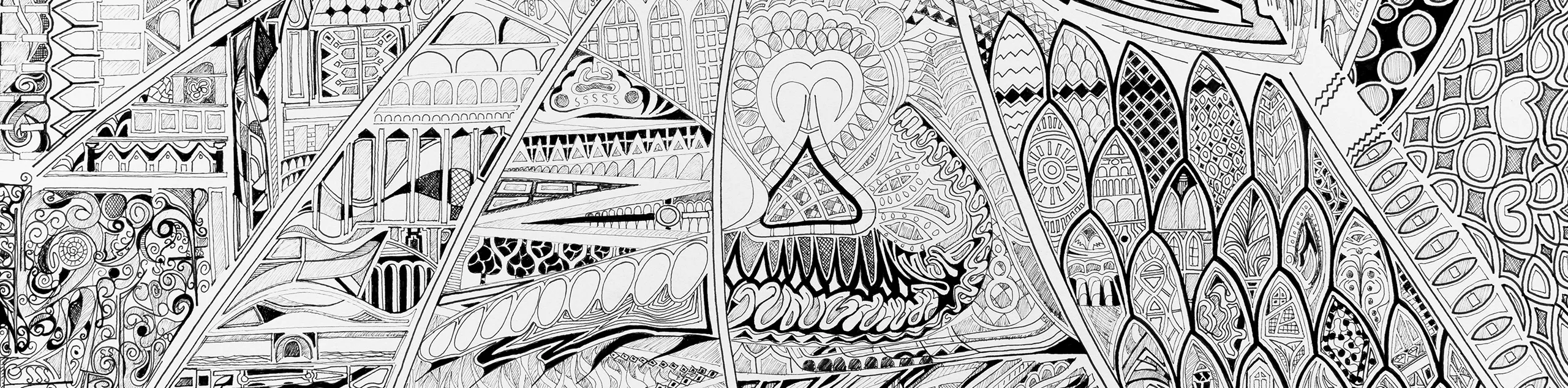
HUMAN MIND
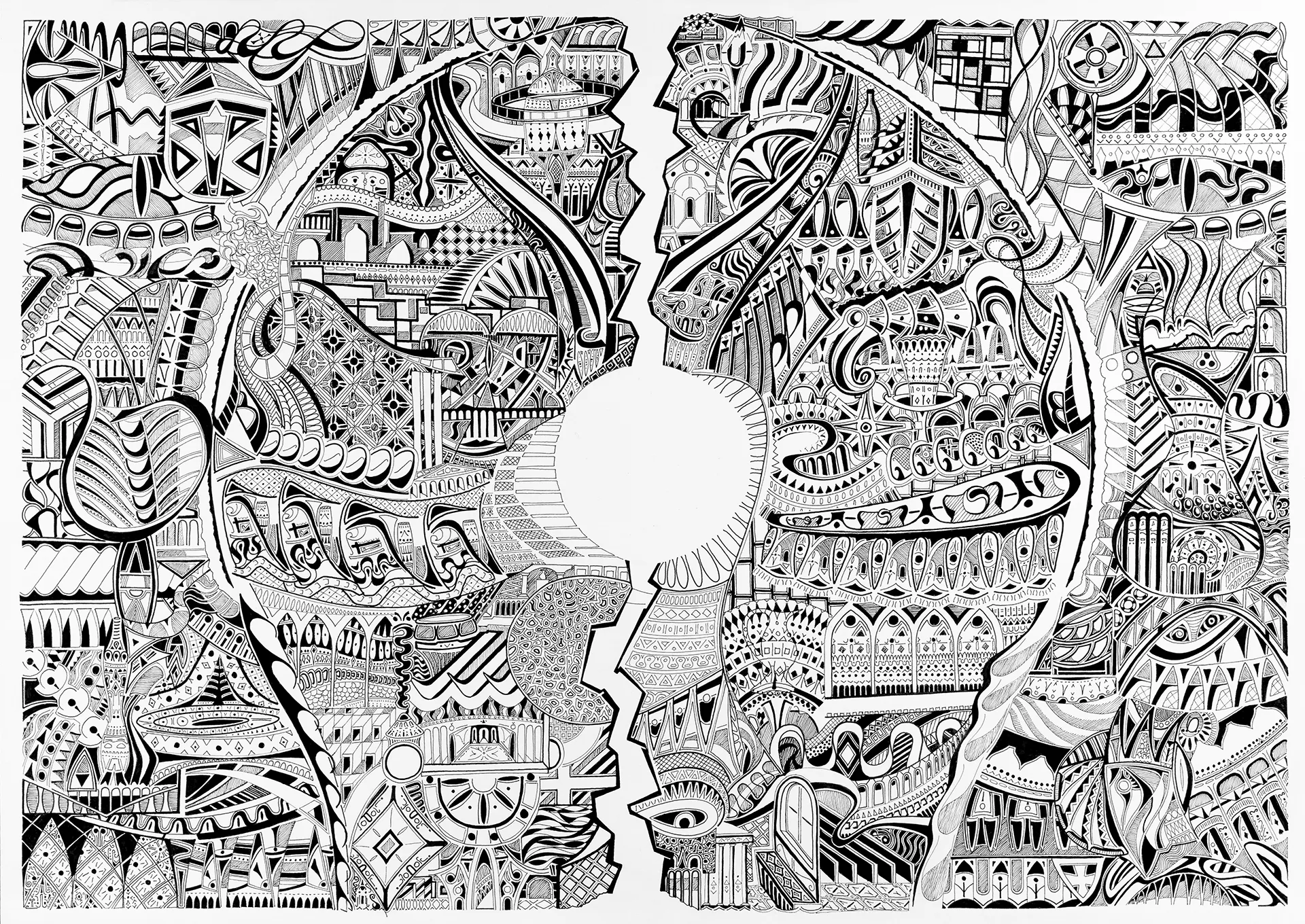
Human Mind is born in a moment of transition, when the perception of time inevitably alters the way one observes one's own existence.
The structure of the work recalls the shape of a skull, transformed by Andrea Babetto into a mental space where thoughts, memories, decisions, and wounds coexist within the same geography.
The white circle, a recurring element in the artist's language, returns as a symbol of purity and as the point towards which the entire composition tends. It is an ideal centre, juxtaposed with the complexity that surrounds it.
A vertical cut traverses the structure like a fracture: a sign of the difficulties, disappointments, and experiences that inevitably modify the individual.
The work thus narrates a process of subtraction. Freeing oneself from the superfluous, from relationships devoid of authenticity, from external expectations, and from compromises becomes part of a broader quest: to rediscover an essential form of existence.
Human Mind does not simply represent thought. It conveys its complexity, its scars, and above all, the possibility of choosing one's direction anew.
ARCHITECTURE
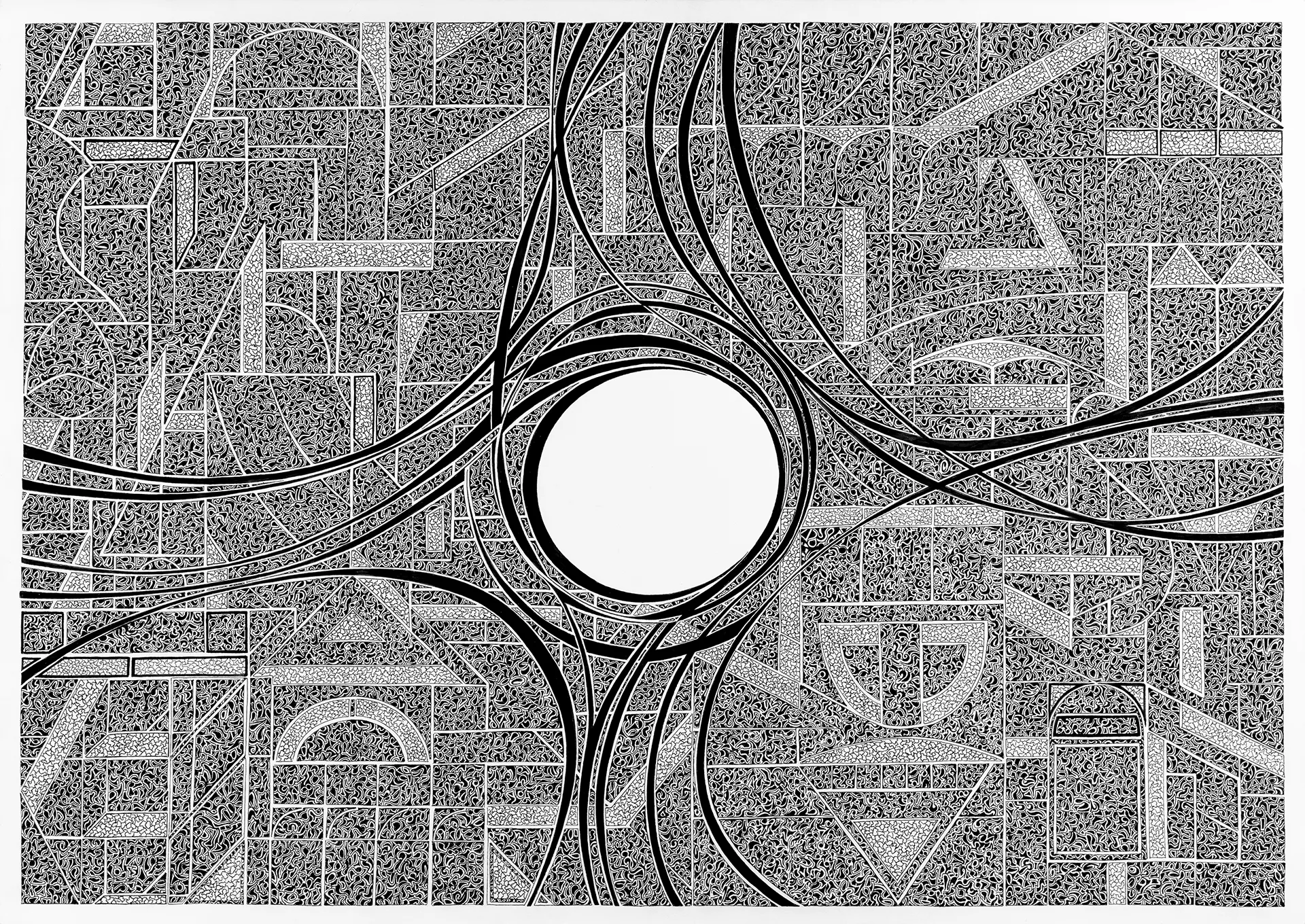
In Architecture, one of the fundamental nuclei of Andrea Babetto's research emerges with particular clarity: the constant tension between order and freedom, rigour and imagination.
At the centre of the composition, the white circle takes on the value of an originating nucleus, an uncontaminated space that refers to inner purity and the search for a possible balance. Around it develops a complex architecture of lines, geometries, and trajectories that seem to approach, overlap, and sometimes threaten its integrity.
It is the symbolic representation of existence according to Babetto: an apparently ordered structure, continuously traversed by the unpredictability of choices, encounters, and experiences.
The geometries that populate the surface become fragments of reality, presences, relationships, and memories. The precision of the mark does not eliminate the unforeseen, but attempts to contain it.
Architecture thus positions itself at the equilibrium point between formal discipline and the dreamlike dimension, transforming the work's surface into a possible map of existence.
SADLY
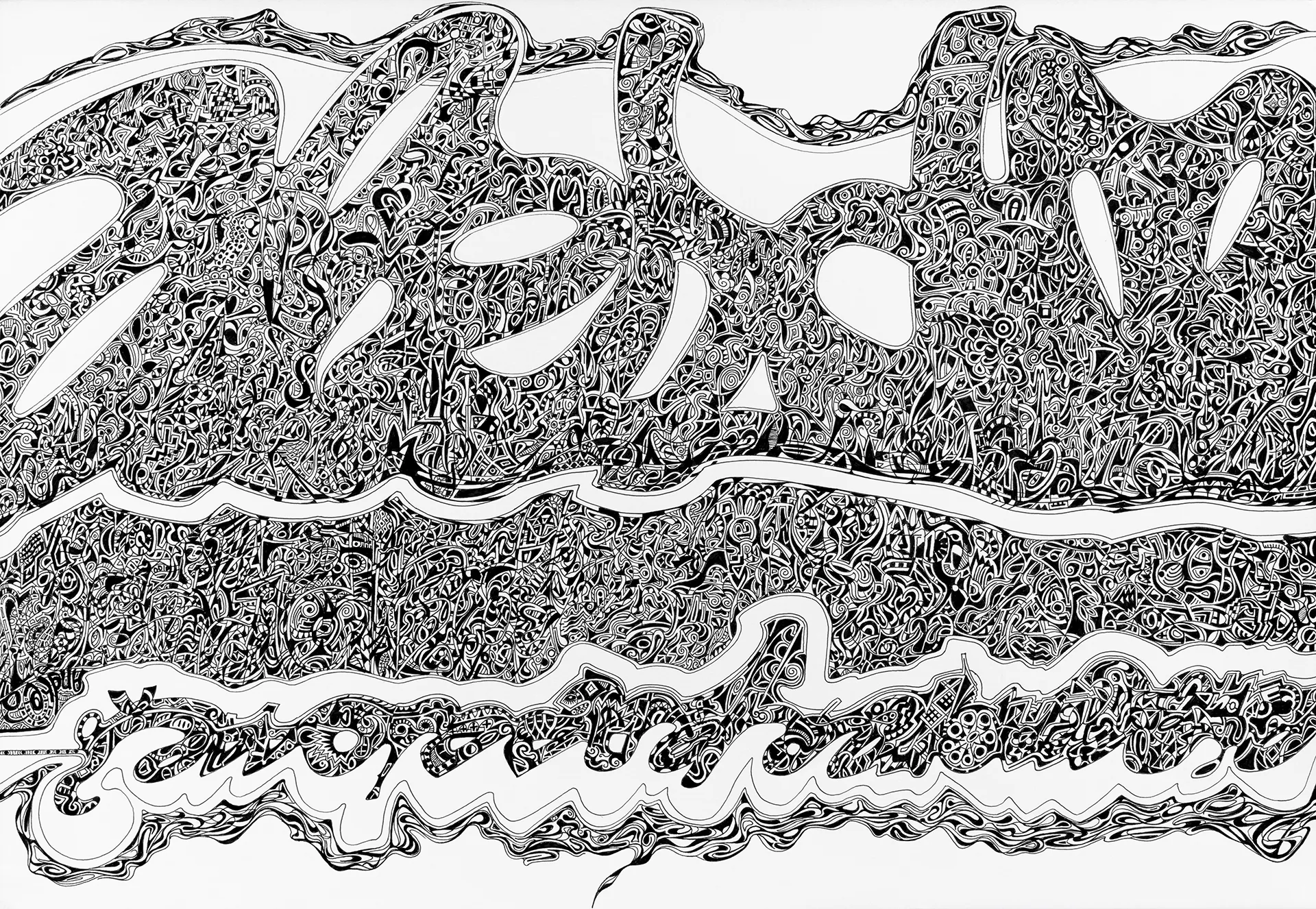
Among Andrea Babetto's most intimate works, Sadly (Tristemente) originates from a condition of profound personal restlessness.
The surface seems to lose the order that characterises other compositions by the artist. Thick, angular, and aggressive lines conflict with softer, more harmonious marks, generating a visual tension that immediately becomes emotional tension.
Within this weave, white openings appear: small breaches, possible escape routes. They do not yet represent a solution, but the hypothesis that beyond complexity, a different space might exist.
The work thus takes the form of an emotional cartography. Disorder is neither hidden nor artificially recomposed: it is shown.
In Sadly (Tristemente), the mark becomes the language of a fragility that seeks to be communicated. It is perhaps precisely this exposure of restlessness that makes the work one of the most authentically autobiographical testimonies of Babetto's research.
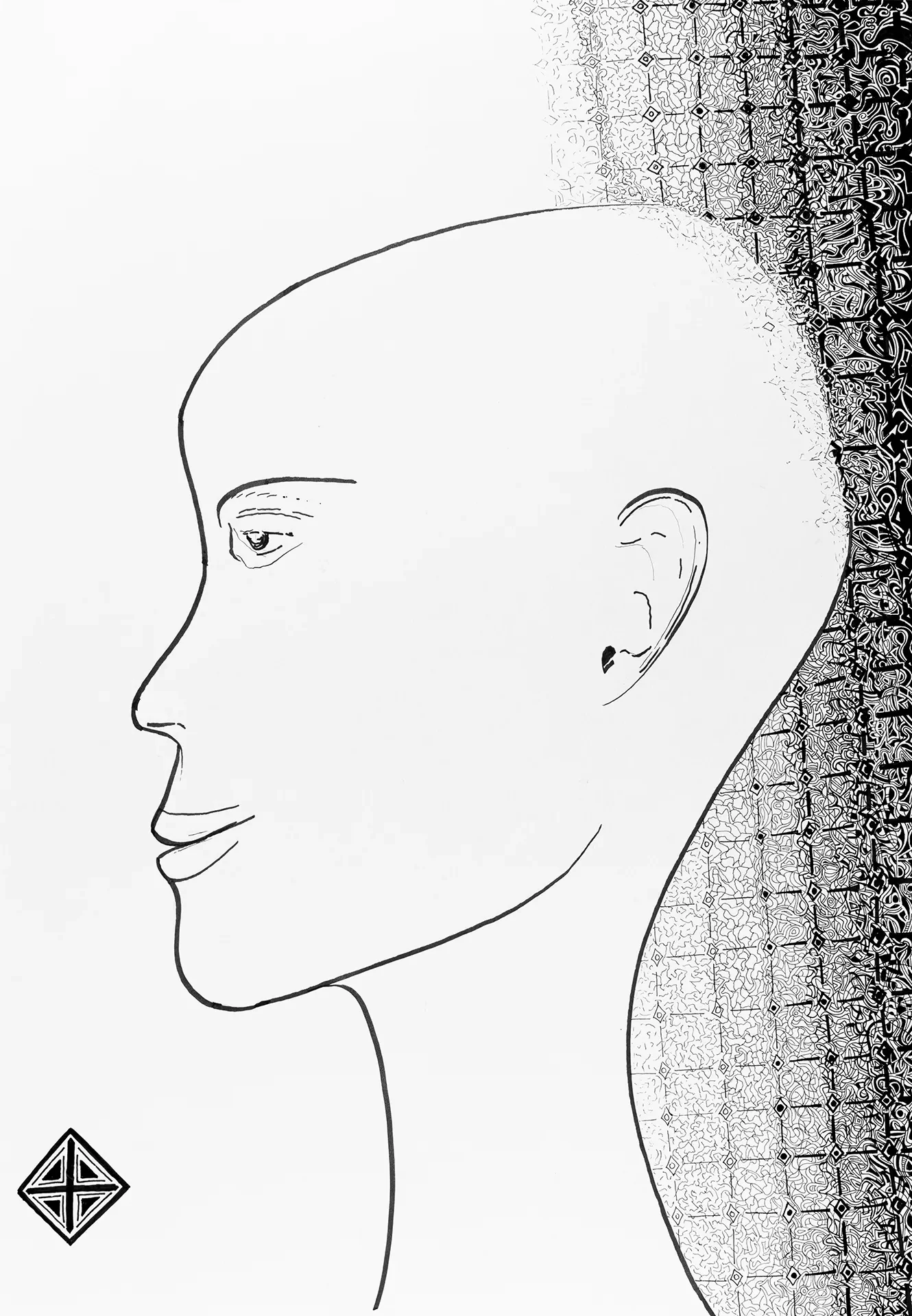
WOMAN IN PROFILE
The pursuit of beauty runs through much of Andrea Babetto's production, but in Woman in Profile, it is conducted through a radical process of simplification.
The female face is reduced to its essence. Hair, ornaments, and superfluous details disappear: what remains is the line, solely tasked with constructing identity, elegance, and presence.
In the rear part of the figure, however, the artist's typical graphic texture re-emerges. The abstract mark seems to approach the woman until it dissolves into her nape, progressively erasing the boundary between figure and space.
It is in this contamination that the meaning of the work is concentrated.
The beauty observed by the artist does not remain something external: it enters his language, modifies it, and finally becomes part of it.
Woman in Profile thus narrates less a face than a process: the attempt to transform the perception of beauty into an inner experience.
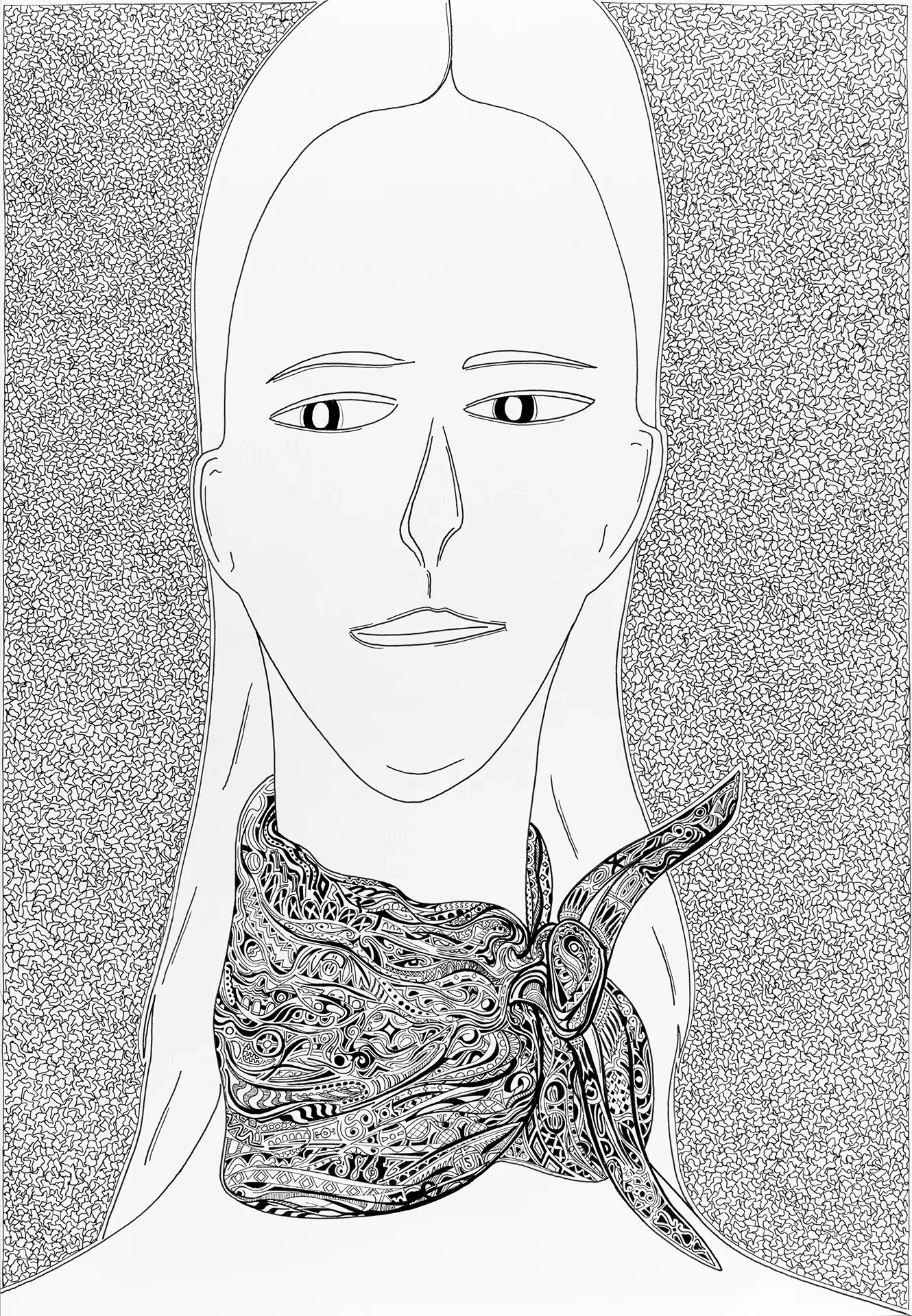
GIRL WITH SCARF
In Girl with Scarf, the female figure emerges through a process of progressive subtraction.
Andrea Babetto deliberately foregoes the precision of a portrait: the face and hair remain merely hinted at, almost suspended, while attention converges on the elongated neck and, above all, on the scarf.
It is precisely this element that becomes the visual centre of the composition. The meticulous graphic construction of the fabric contrasts with the essentiality of the figure, generating a dialogue between precision and lightness.
Personal memory — youth, the recollection of the maternal figure — remains present without transforming into an explicit narrative.
The woman thus becomes a universal presence, an idea of elegance even before being an identifiable person.
In the background, the artist's characteristic texture returns, almost a mental fabric within which memory takes shape.
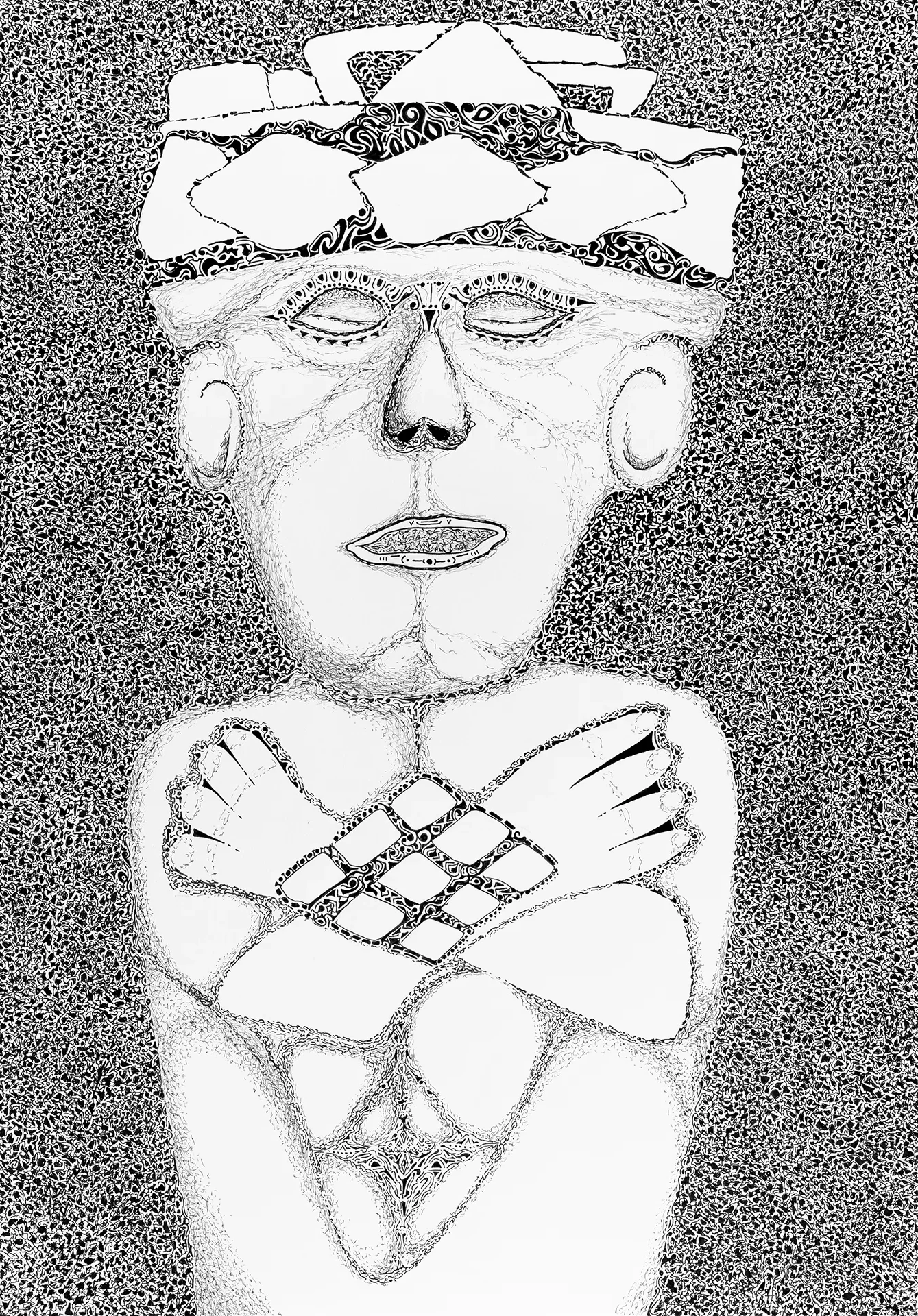
MAYA
Travel and encounters with distant cultures enter Andrea Babetto's research through Maya, a work inspired by the artist's visit to the National Museum of Anthropology in Mexico City in 2023.
The iconographic reference originates from the observation of Mesoamerican sculpture, but is progressively removed from its archaeological dimension to be assimilated into the artist's personal language.
Face and body emerge through different graphic registers, while Babetto's characteristic texture invades the surrounding space, contributing to the very definition of the figure.
The ancient image is thus traversed by a contemporary mark.
Maya does not seek a philological reproduction of the original artefact. It is rather the narrative of an encounter: that between a memory belonging to a distant civilisation and the imagination of an artist who observes it, internalises it, and finally renders it through his own visual vocabulary.
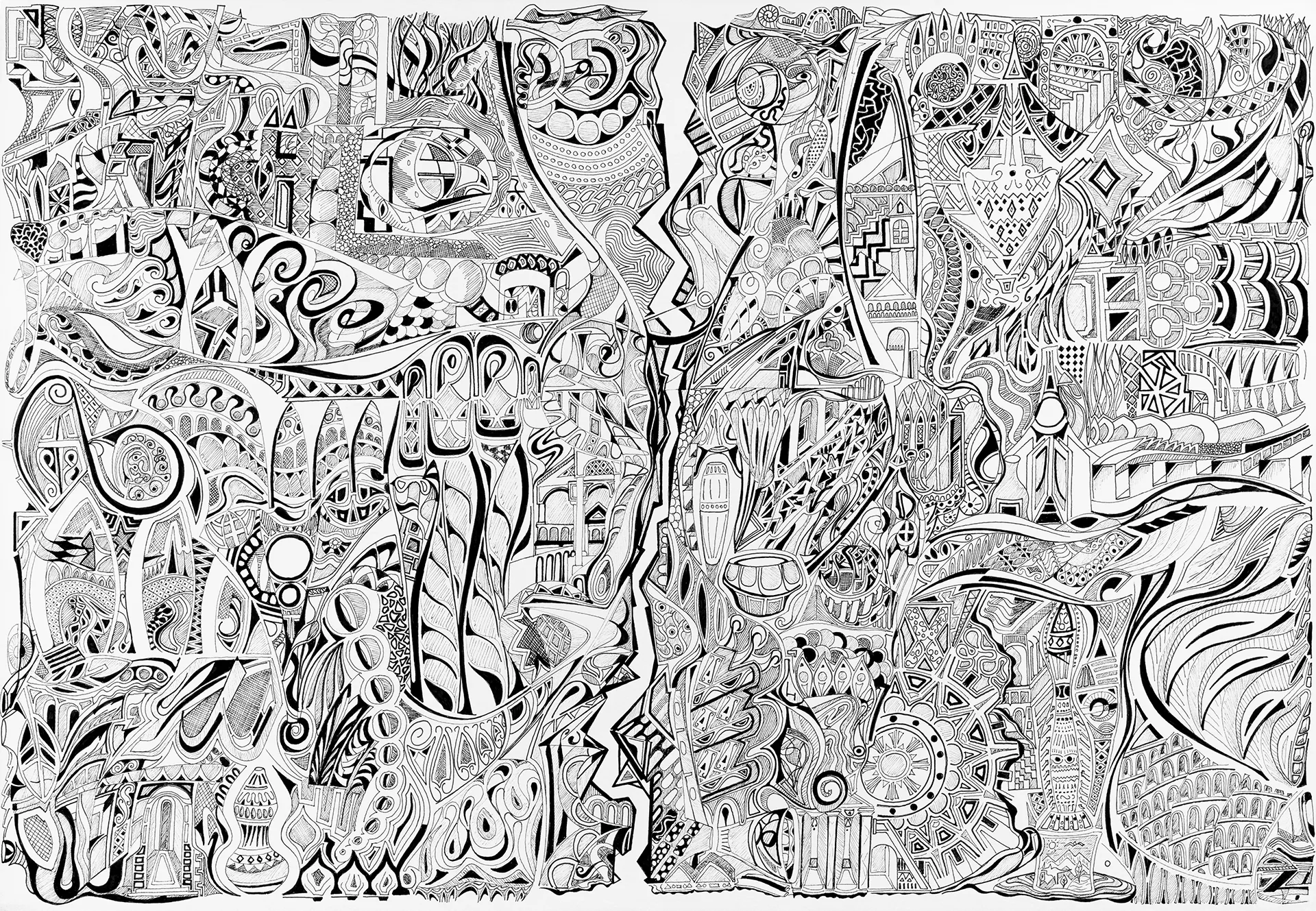
JOURNEY
Journey is born as a dedication to the artist's teenage daughter, but progressively transcends the private dimension to transform into a universal reflection on growth.
Adolescence is interpreted as a territory of passage: a space where identity is not yet definitively constructed, but begins to take shape through character, desires, interests, and autonomy.
The composition retains a sense of balance and purity, but hints at the presence of movement.
The journey evoked by the title is not geographical. It is the one that leads from childhood to maturity.
Andrea Babetto observes this transformation without seeking to determine its destination. Rather, he constructs a visual base, almost a protected space from which the figure can begin its own path.
The work thus becomes simultaneously a paternal gesture and a reflection on time: accompanying also means progressively accepting distance.
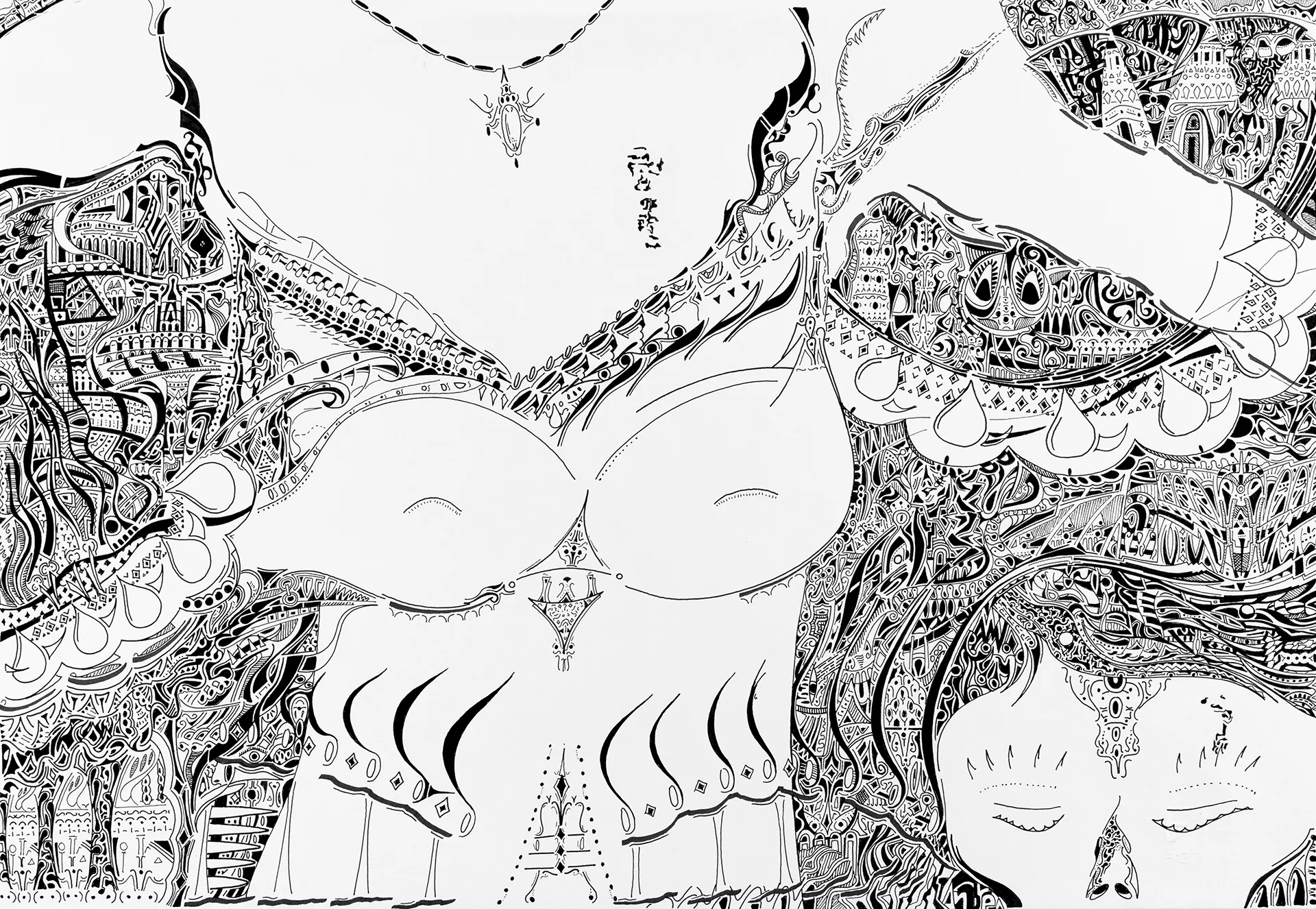
GYPSY WITH CHILD
Gypsy with Child is a work traversed by a strong narrative tension.
At the centre of the composition unfolds the unresolved relationship between an adult figure and a child, placed within a restless visual space, almost devoid of coordinates.
The female figure appears faceless. This absence subtracts identity from the subject and focuses attention on the relationship between the two protagonists. The child, relegated to the lower part of the composition and characterised by elements that symbolically belong to the adult world, instead becomes the true emotional centre of the work.
Andrea Babetto stages a condition of interrupted childhood: the moment when the child is forced to prematurely confront dynamics that do not belong to them.
The surrounding graphic texture amplifies the sense of instability. There is no safe place, nor a precise boundary between protection and danger.
The work thus takes on the character of a reflection on vulnerability, adult responsibility, and the loss of innocence.
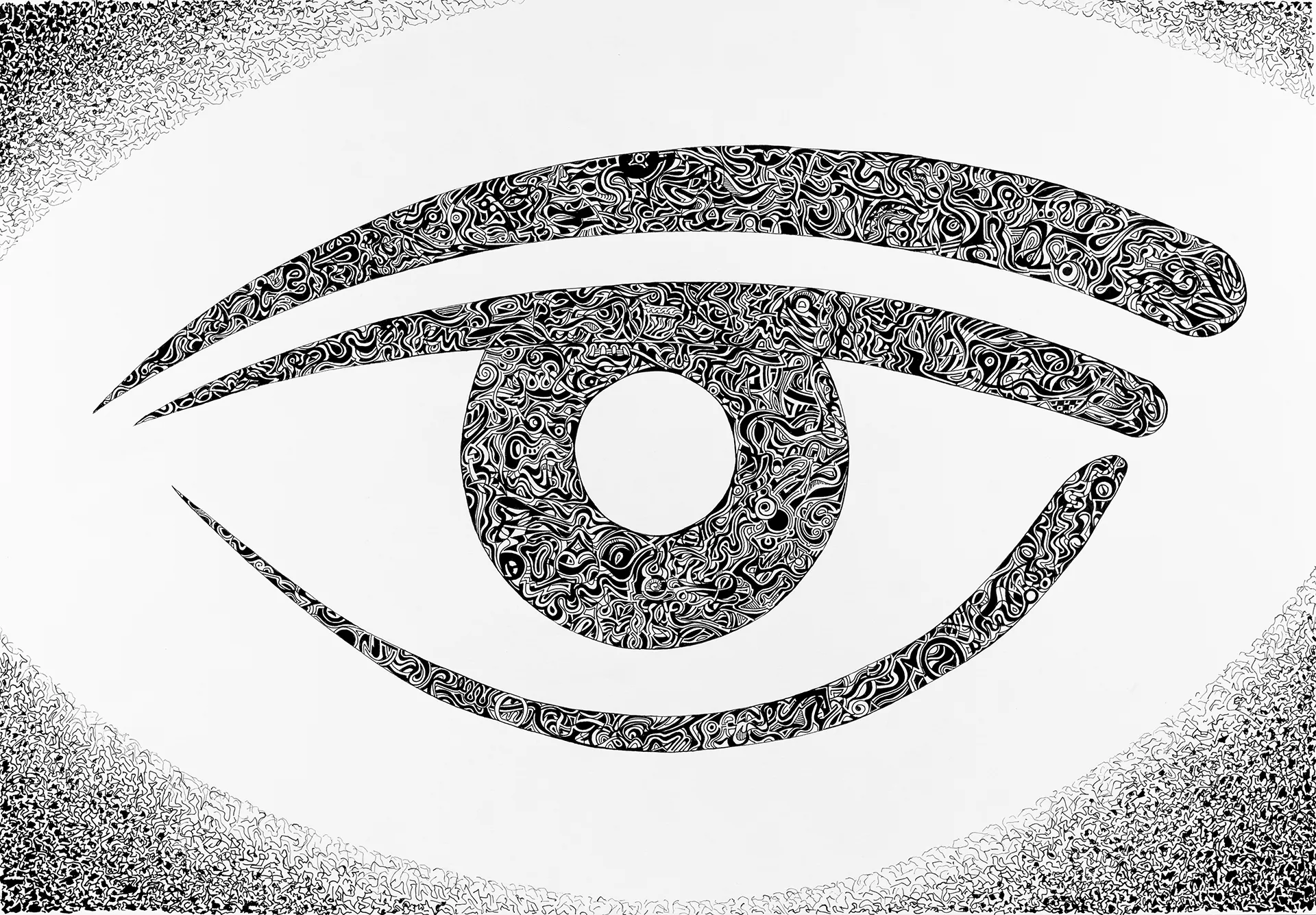
THE EYE
For Andrea Babetto, seeing does not simply coincide with the physiological act of looking.
The eye becomes the manifesto of a quest that runs through all his production: to recognise the beauty present in reality.
Nature, art, design, and everyday forms enter experience through the gaze and are subsequently transformed by drawing.
The construction of the eye is deliberately essential. The precision of the lines and the cleanliness of the form make it almost an exercise in visual discipline, while in the corners, the artist's characteristic graphic texture returns.
A precise relationship is thus established between the centre and the periphery of the work: at the centre, the instrument of observation, around it, the world interpreted through the mark.
The eye narrates the originating moment of Babetto's artistic practice: before drawing, one must learn to see.
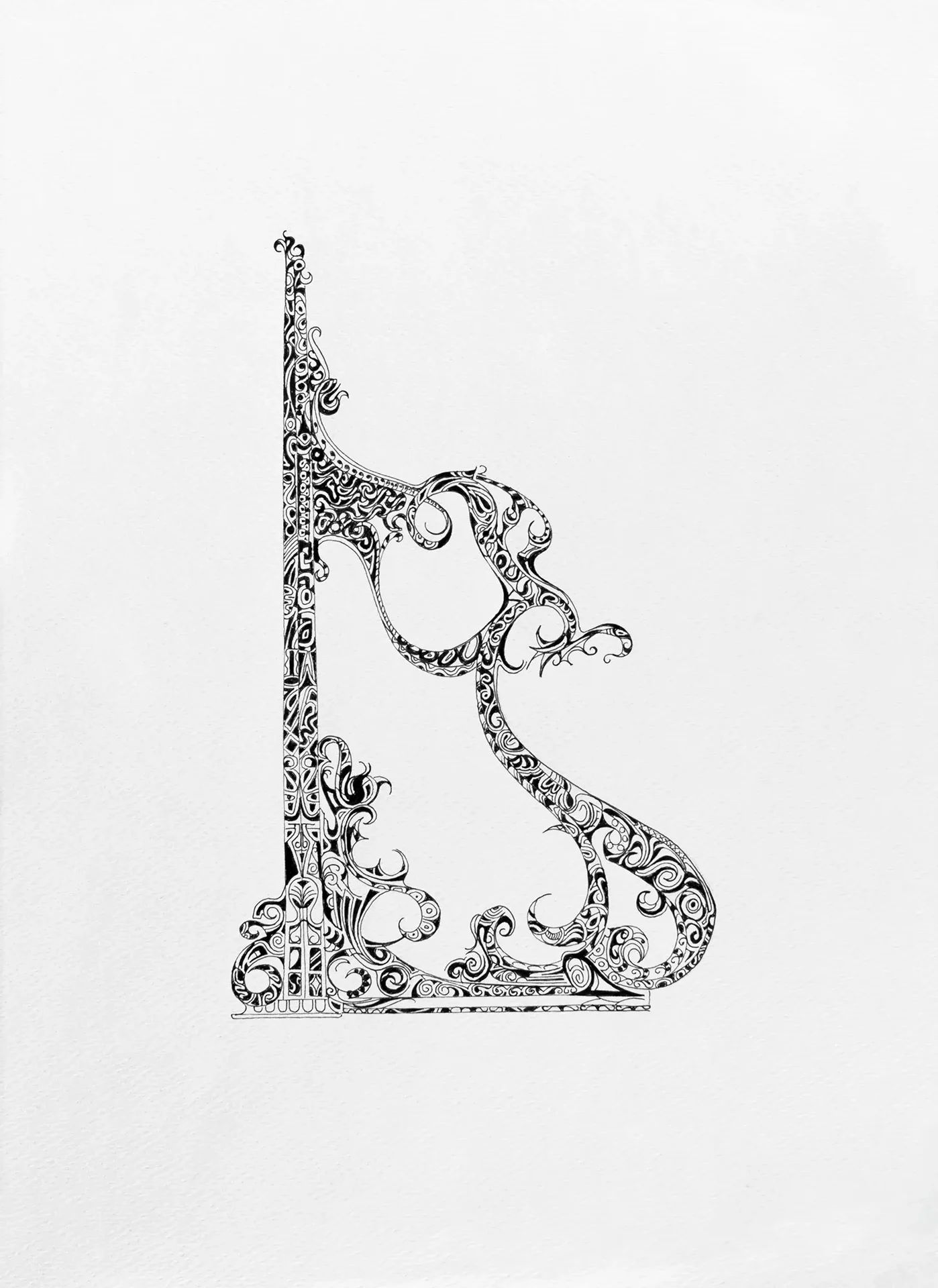
THE ROLE OF THE FATHER
The Role of the Father addresses one of the most delicate passages in the parent-child relationship: the moment when protecting means progressively learning to let go.
Growth inevitably modifies distances. The paternal figure is no longer called upon merely to indicate a direction, but to construct a space in which the other can autonomously find their own.
Andrea Babetto translates this condition through his own graphic language, made of structures, paths, and geometries that simultaneously suggest protection and openness.
The father thus becomes a presence more than a guide, a reference more than a boundary.
The work introduces into the artist's research a reflection on the very meaning of responsibility: accompanying someone in their growth, knowing that the completion of that journey inevitably coincides with their freedom.
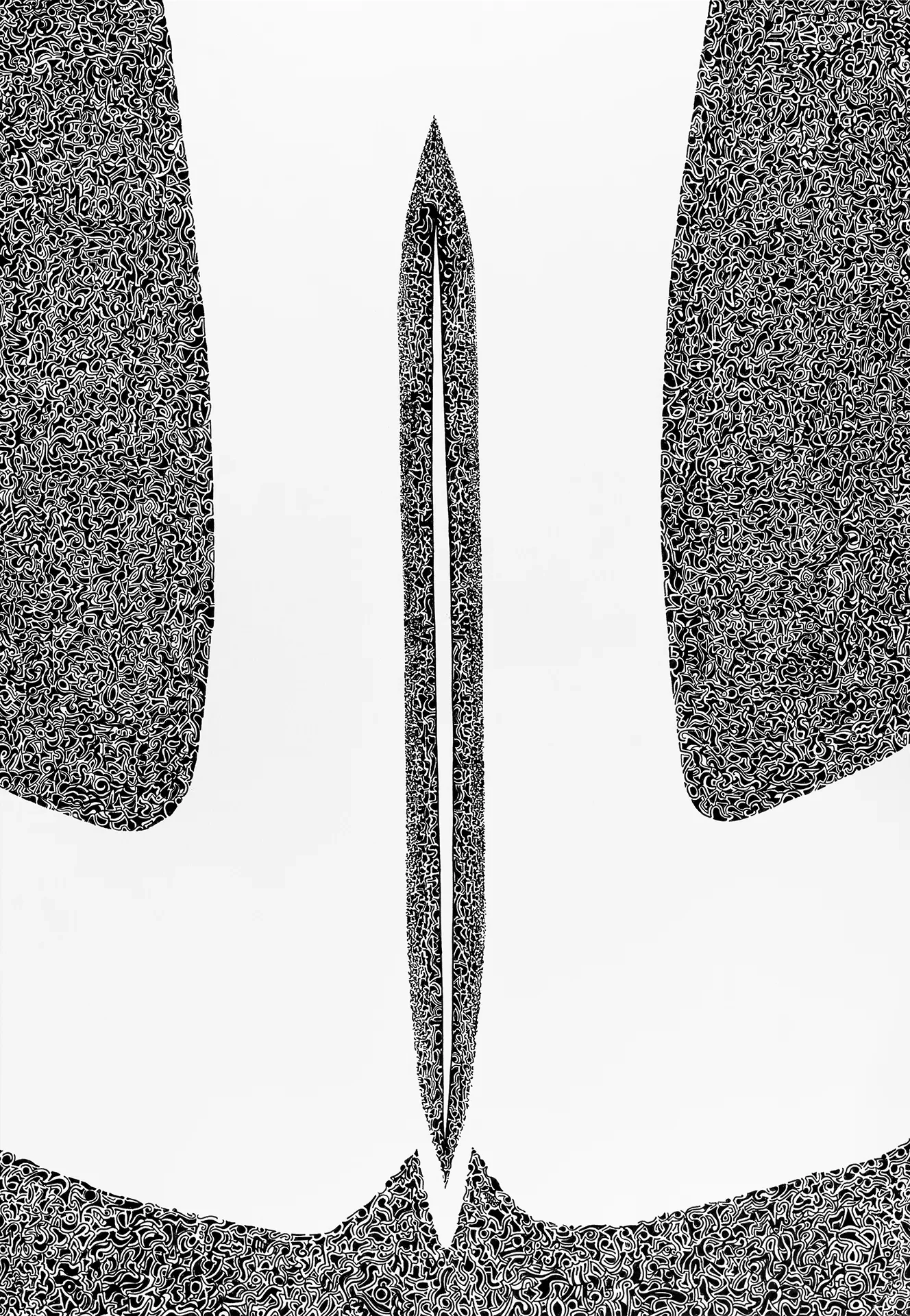
LIFE
In Life, two central themes of Andrea Babetto's research — beauty and origin — converge within the same composition.
An essential, slender, and almost archetypal female figure traverses the work. The body is removed from the dimension of portraiture to become form, balance, generative principle.
At the centre appears an element that symbolically recalls the origin of life, transforming the figure into a space where beauty and creation seem to coincide.
The apparent simplicity of the image is the result of a process of reduction: eliminating what is accessory to achieve a form considered essential.
Life belongs to a phase of Babetto's research in which the female body becomes one of the main instruments through which to interrogate the concepts of harmony, purity, and origin.
BLACK AND WHITE
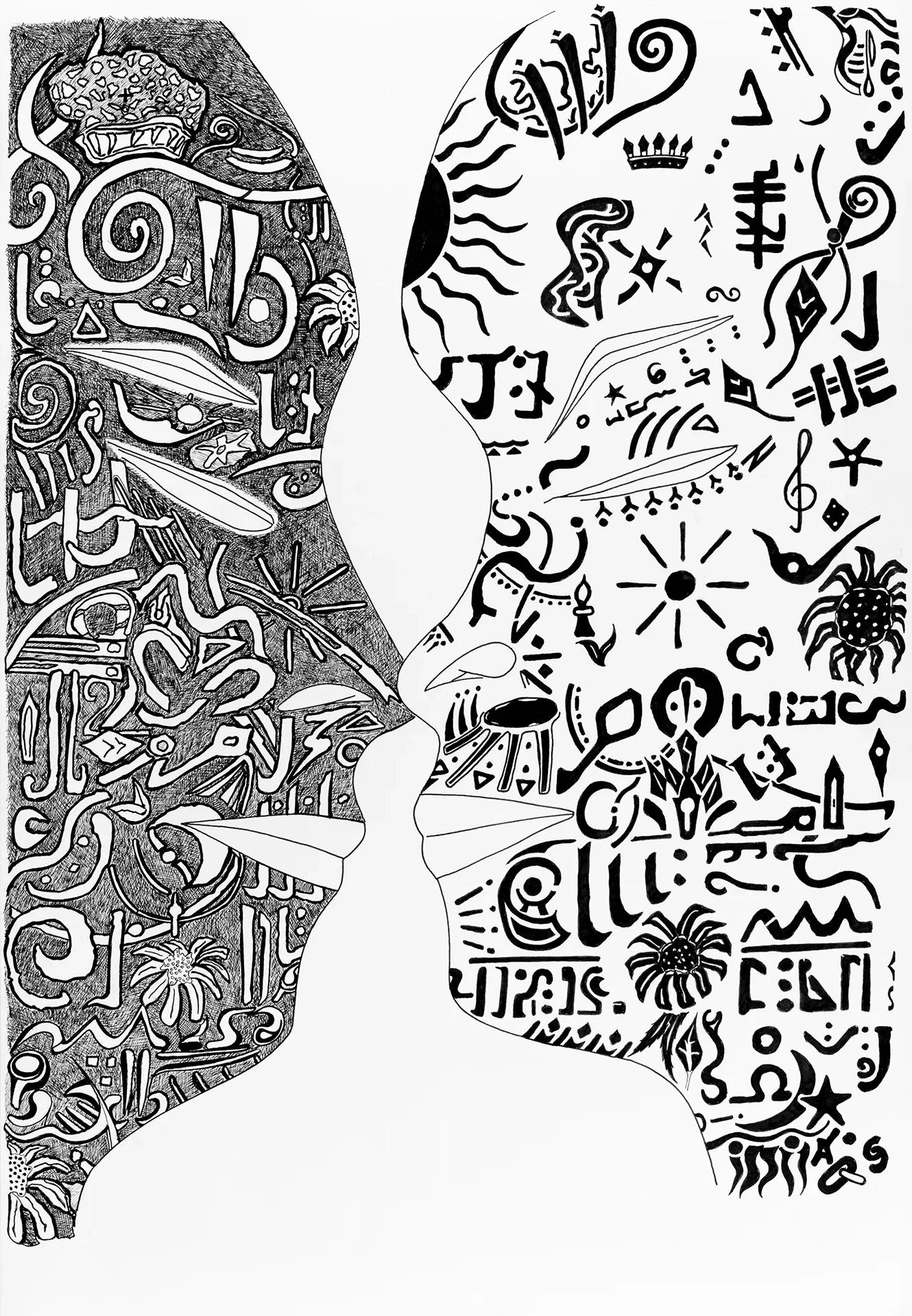
Two figures meet, bearing on their skin the traces of their respective existences.
In Black and White, Andrea Babetto uses chromatic difference as an immediately perceptible element, only to progressively empty it of meaning.
The marks that traverse the bodies become visual biographies: experiences, wounds, memories, and passages that have constructed the identities of the two protagonists.
Despite originating from different stories, these traces ultimately resemble each other.
It is in this progressive correspondence that the core of the work develops: what initially appears as difference gives way to a common human condition.
The sentimental encounter then becomes the symbolic place where external categories lose importance, and two individuals remain, defined above all by what they have traversed.
CHAMPAGNE
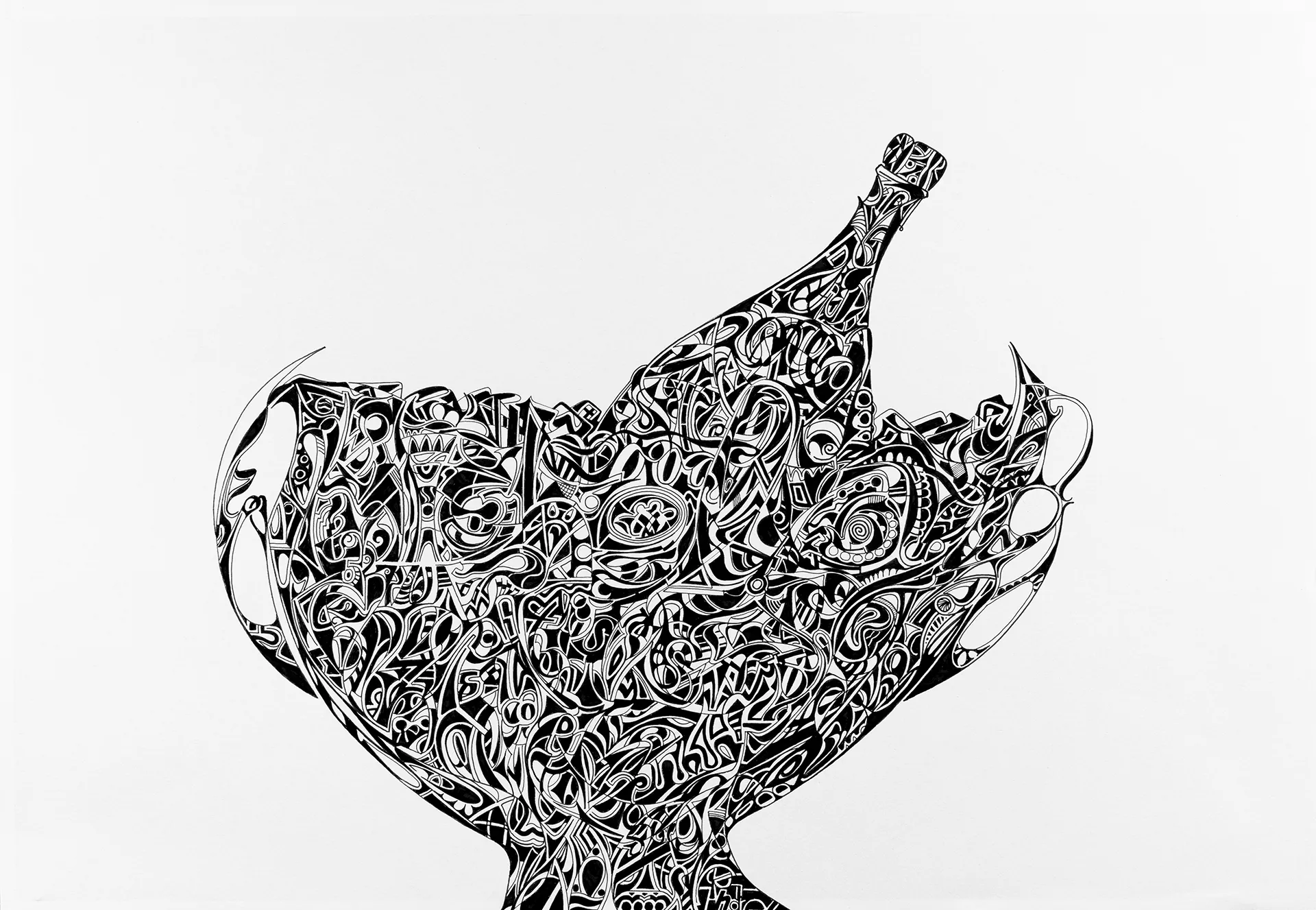
In Champagne, Andrea Babetto celebrates an apparently simple and precisely for this reason precious dimension: shared time.
The work originates from the memory of a summer evening spent with friends, transforming a private episode into a broader reflection on conviviality and the rarity of moments of authentic lightness.
The ice bucket and bottle become iconic elements around which the artist's characteristic graphic texture develops.
Here, however, the mark seems to expand beyond its usual measure: it becomes abundant, almost uncontrollable.
It is a density that corresponds to the sensation evoked by the work.
Champagne celebrates not so much luxury as emotional abundance: that brief moment in which friendship, serenity, and pleasure seem to suspend the complexity of daily life.
SAMUIL
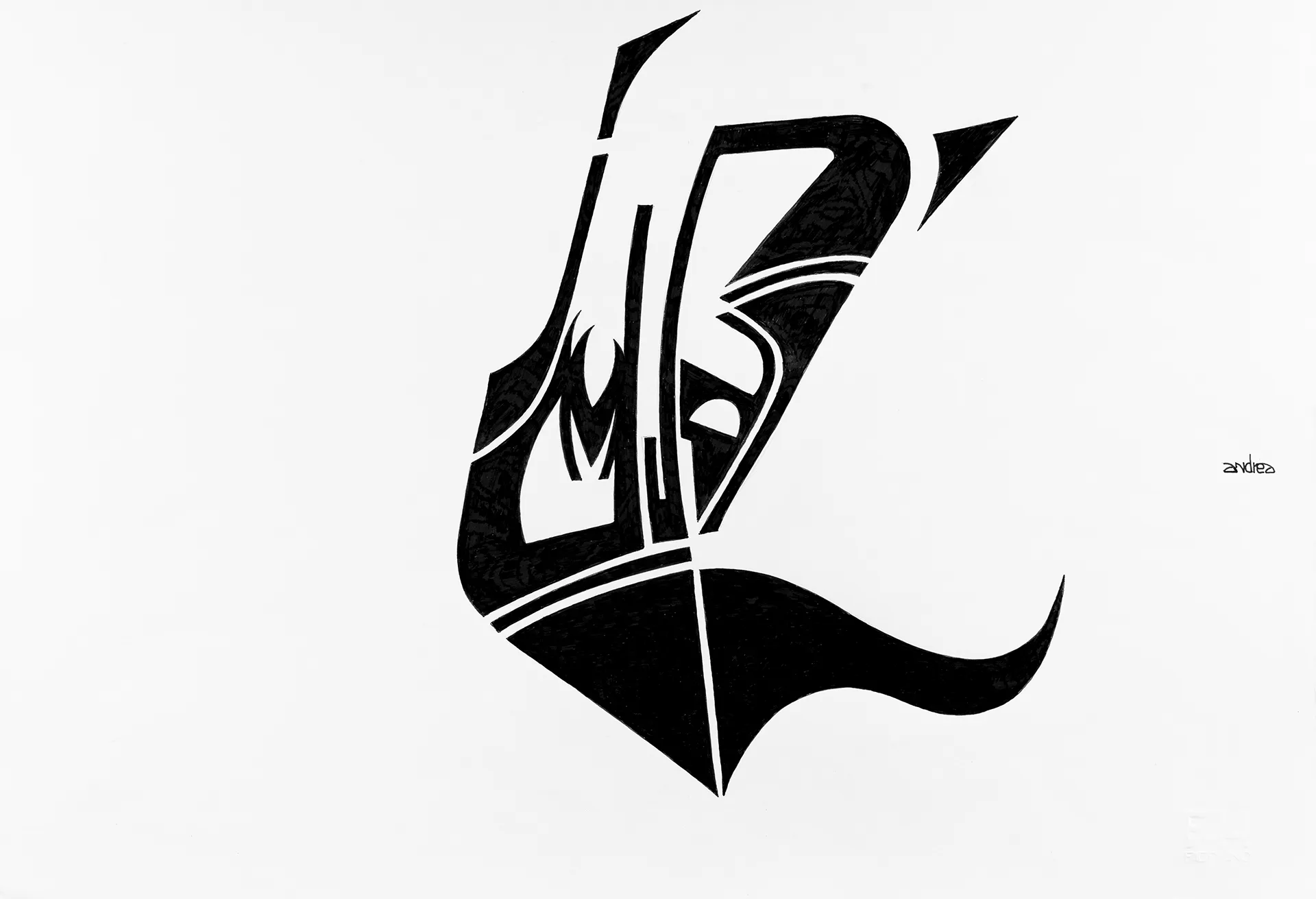
Samuil is born from an emotional bond and the desire to transform a name into a visual identity.
Andrea Babetto does not construct a traditional portrait. It is the very writing of the name that becomes the material of the work and the starting point for narrating a personality that is progressively emerging.
The work is situated in the unstable territory of adolescence, when character and identity begin to manifest without yet being definitively formed.
Graphic mark and emotional dimension thus end up overlapping.
Samuil is both a dedication and an observation: the attempt to capture through drawing a moment of growth destined, by its nature, to transform rapidly.
FLAG
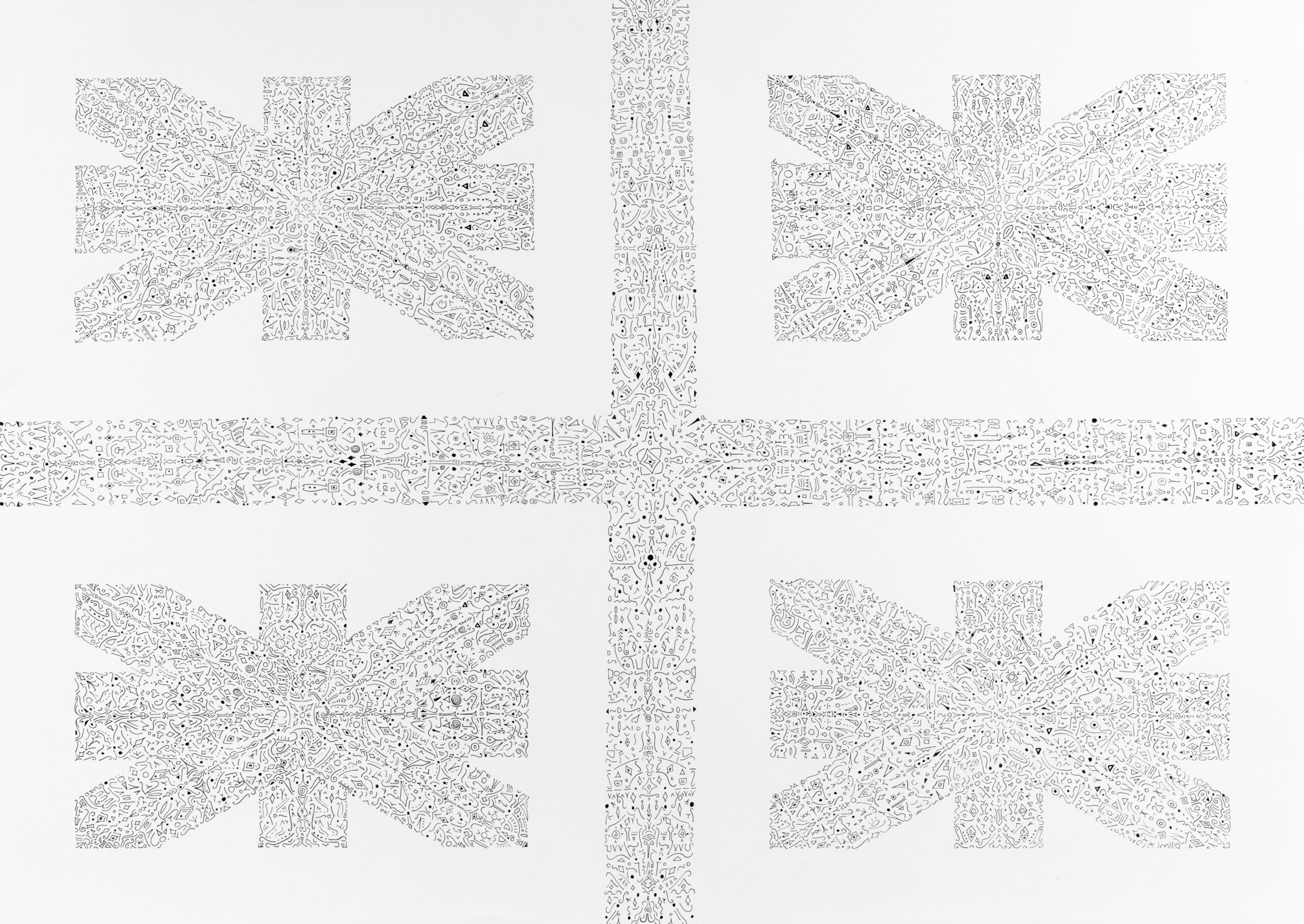
In Bandiera, Andrea Babetto reduces a recognisable reference — the flag of the United Kingdom — to an abstract weave of delicate geometries. The forms, deliberately light and almost imperceptible, favour the purity of the stroke and the balance of the composition over the immediacy of the symbol. The starting image remains as a trace, while the drawing asserts itself above all as an exercise in order and measure. The work reveals an interest in geometry's capacity to transform a collective emblem into a personal construction, suspended between recognisability and abstraction.
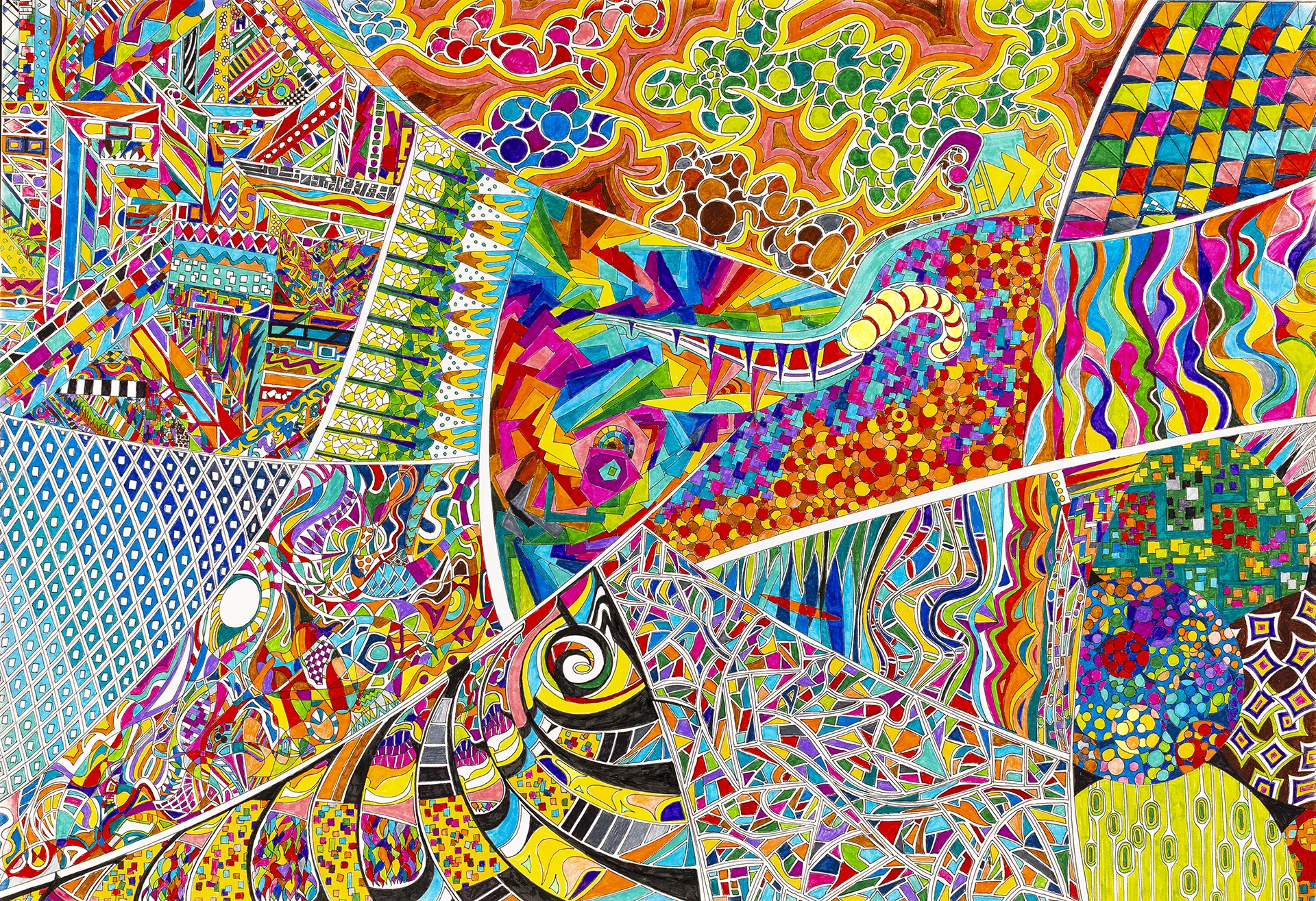
METAMORPHOSIS
Colour, a rare presence in Andrea Babetto's work, becomes a narrative tool in Metamorphosis.
The composition is articulated into thirteen segments, each holding an emotional state, a fragment of experience, a different season of existence.
The ensemble appears vital, luminous, almost euphoric. However, observing the surface carefully, areas emerge where the colour fades and the outlines become darker.
These are the necessary interruptions to the narrative.
The metamorphosis evoked by the title does not consist of a definitive passage from darkness to light, but in the continuous alternation of the two conditions.
Andrea Babetto thus constructs a kind of chromatic autobiography in which happiness does not erase the shadow zones, but comprehends and incorporates them.
It is precisely from their co-presence that the vitality of the work arises.
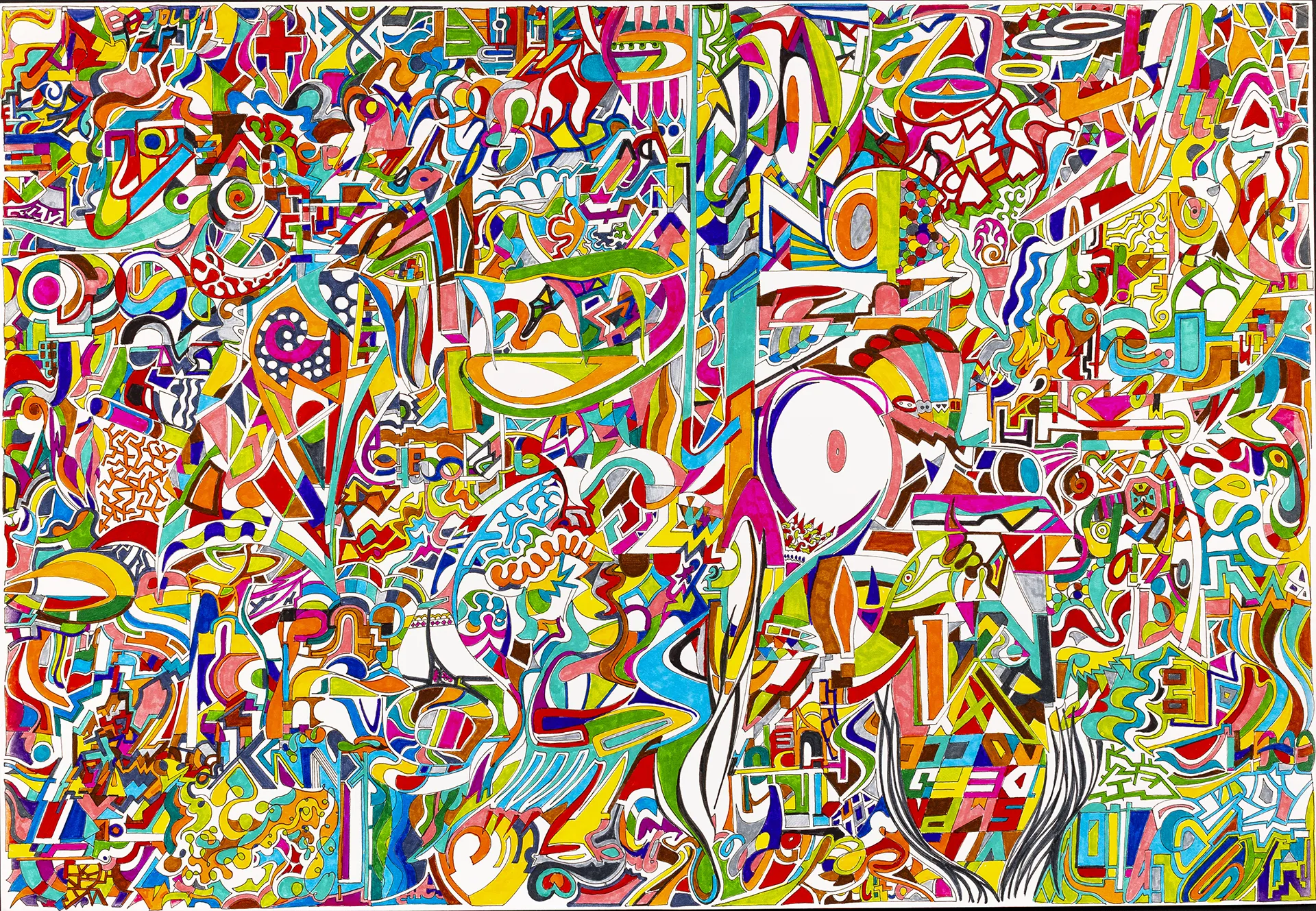
THE DANCE
The Dance constructs a geography of lightness.
Scenes, fragments, and forms interlock, generating a dynamic composition, traversed by an immediate sense of festivity and movement. Within it, the white circle returns, a recurring element in Andrea Babetto's symbolic alphabet, once again associated with the search for an uncontaminated inner dimension.
But the apparent serenity of the work is interrupted.
Vertical elements almost silently traverse the composition, introducing a fracture into the continuity of the festivity.
Their presence modifies the reading of the entire work: happiness and sorrow do not necessarily occupy different moments of existence, but can coexist in the same space and at the same time.
The Dance thus becomes a metaphor for life itself: continuing the movement even while knowing the possibility of interruption.
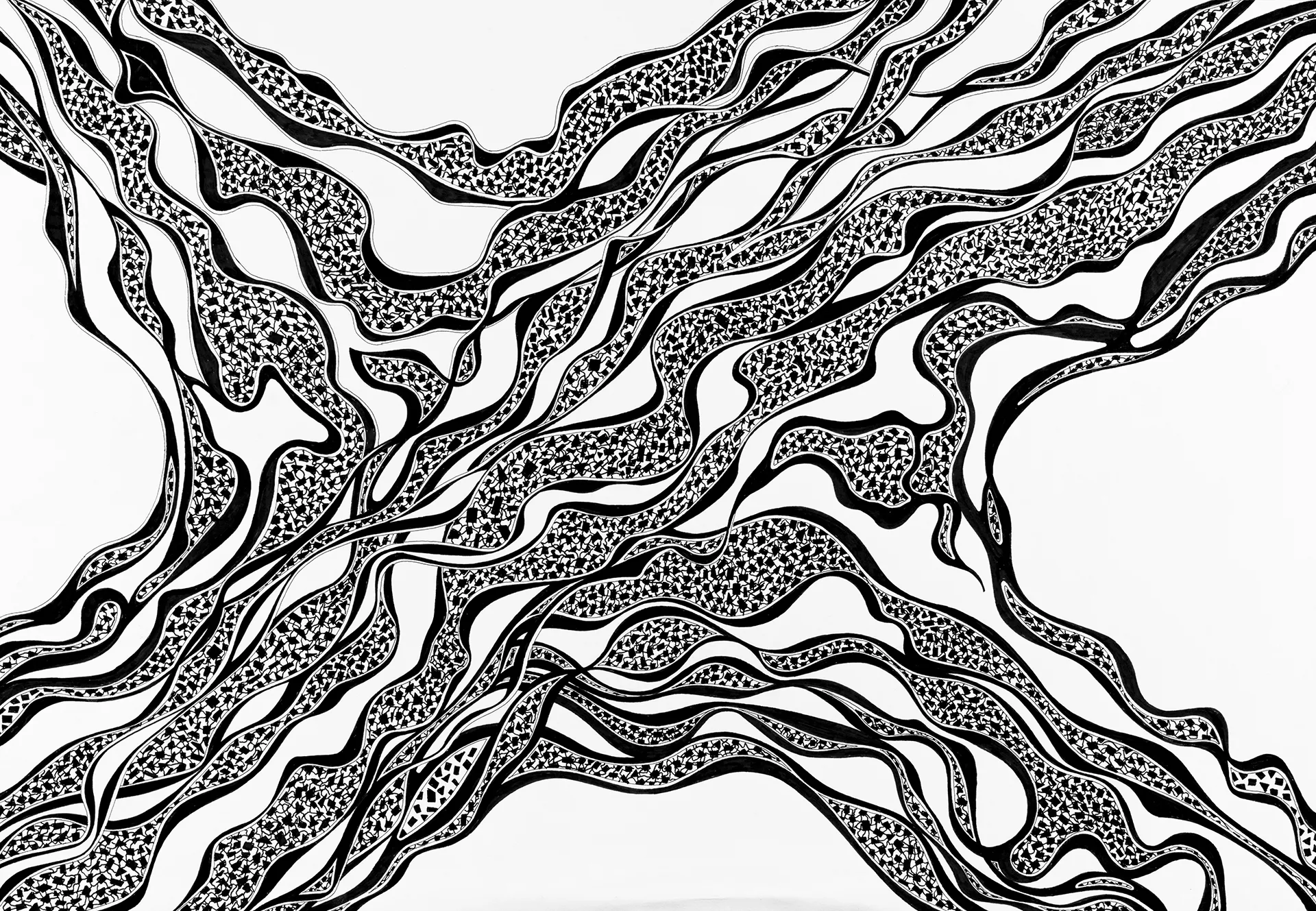
CROSSROADS
Existence can be observed as a succession of trajectories.
Some proceed in parallel without ever meeting. Others brush past each other for an instant. Still others intersect, and from that moment, reciprocally modify their direction.
It is from this intuition that Intersections is born.
Andrea Babetto translates the randomness of human relationships into a system of lines of different thicknesses, connected by a continuous texture. Each path retains its autonomy but becomes part of a broader structure.
Behind the apparent geometric precision thus lies a profoundly human reflection: some of the people destined to become fundamental in our existence enter our lives through seemingly random circumstances.
The formal precision of the work almost attempts to attribute an order to this unpredictability.
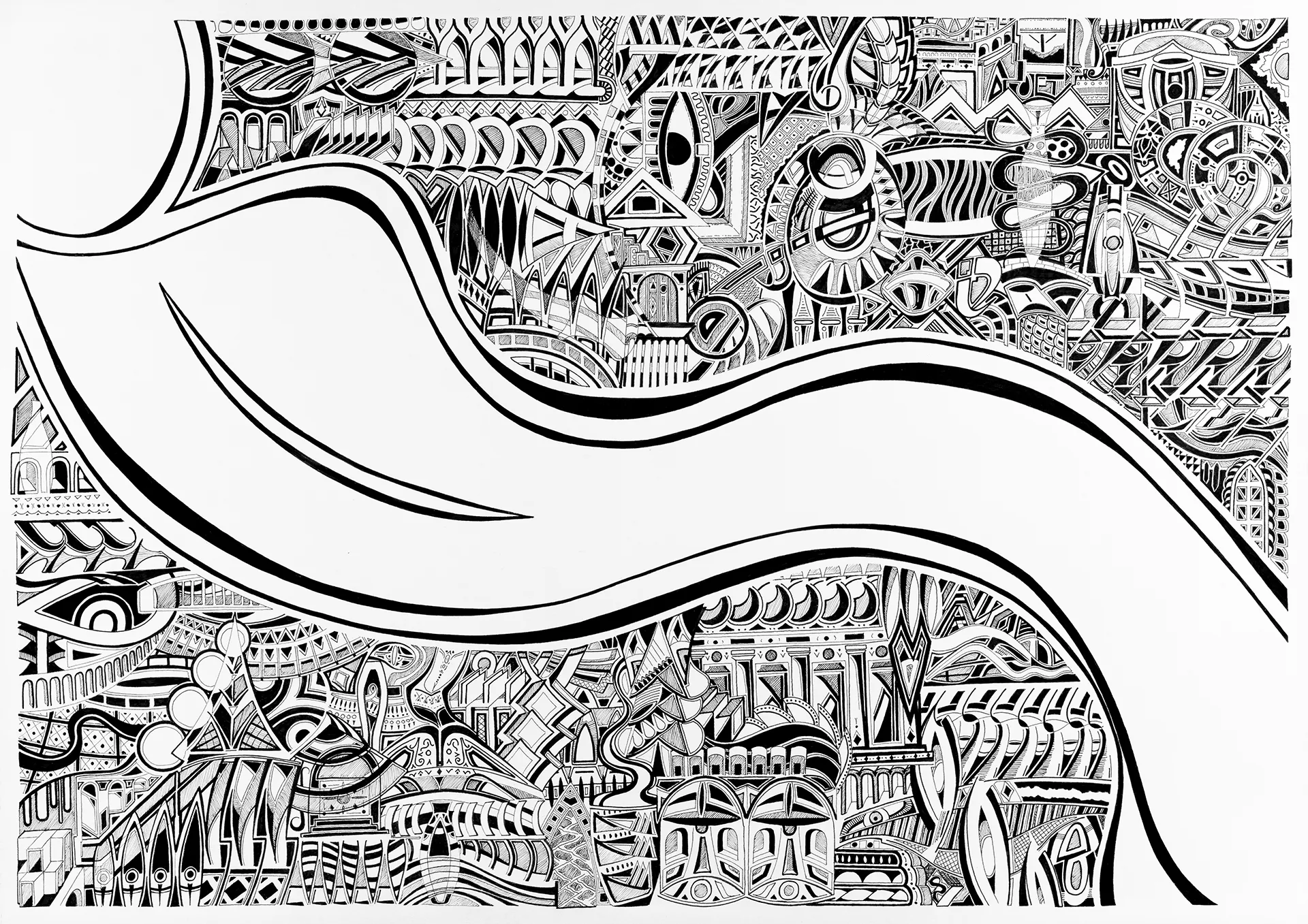
RECLINING WOMAN
A female figure traverses the composition longitudinally like a silent presence immersed in a universe of signs.
Around her, forms and symbols overlap, constructing a complex surface that seems to allow no pauses.
In Reclining Woman, Andrea Babetto relates two different perceptions of time.
On one hand, the frenzy of contemporary existence, represented by accumulation and superposition; on the other, the female body, slender and essential, which introduces a dimension of quietude into the composition.
The figure thus becomes an invitation to presence.
It does not interrupt the movement of the world, but suggests the possibility of traversing it at a different rhythm.
The work proposes a simple and radical reflection: while we are continuously projected towards what is yet to come, we risk losing precisely those seemingly insignificant moments from which, in time, the deepest memories will be born.
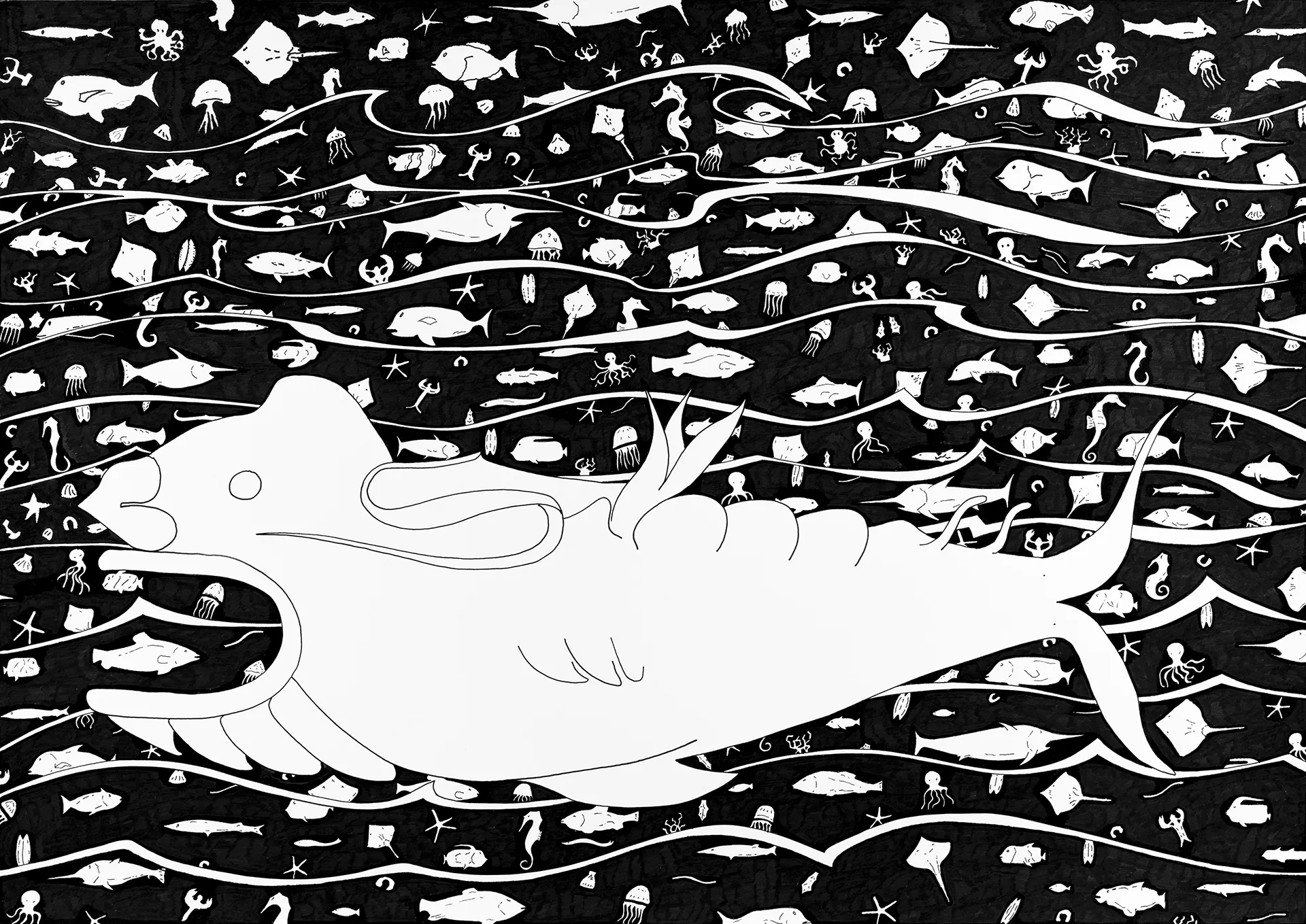
OCEAN
With Ocean, Andrea Babetto deliberately moves away from the language that characterises much of his production.
Ink is used almost like a photographic negative: it is darkness that constructs space, allowing clear figures to emerge from the surface.
At the centre appears an imaginary, disproportionate, and unsettling marine creature. Its presence dominates the entire composition and becomes a metaphor for a power capable of occupying space to the point of subtracting it from others.
The large fish thus takes on a political and social dimension: it represents the economic and power structures that, according to the artist's vision, can stifle individual initiative and creativity.
Furthermore, Dantean suggestions emerge in the almost infernal construction of the scene.
Ocean therefore represents a significant exception in Babetto's production: no longer solely introspection, memory, or the pursuit of beauty, but a gaze directed towards the dynamics of the external world.
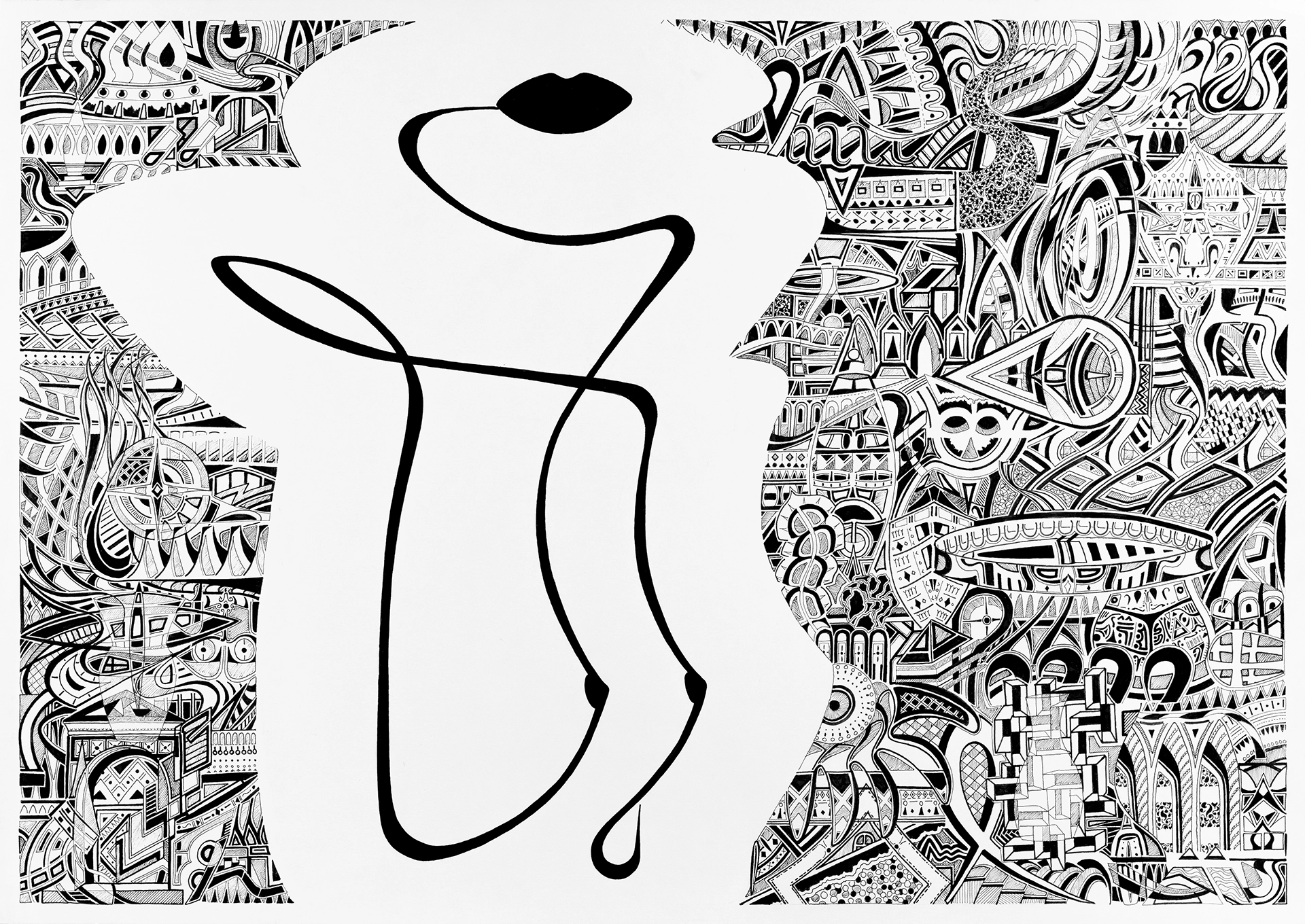
WOMAN'S PROFILE
An elegant presence emerges at the centre of urban frenzy.
In Profile of a Woman, Andrea Babetto relates two seemingly opposite worlds: the quietude of a female figure constructed through essential lines and the luminous, fragmented, and incessant rhythm of the great city.
The woman does not entirely belong to the space that surrounds her. Rather, she seems to traverse it while maintaining her own distance.
The contrast becomes the true subject of the work.
On one hand, the sparkle of nightlife, the accumulation of stimuli, and the speed of the metropolis; on the other, a beauty that does not need to impose itself and finds its strength in simplicity.
Profile of a Woman thus continues Babetto's research into the female figure as a manifestation of harmony, elegance, and formal purity, contrasting the saturation of the contemporary world with the silent power of the line.
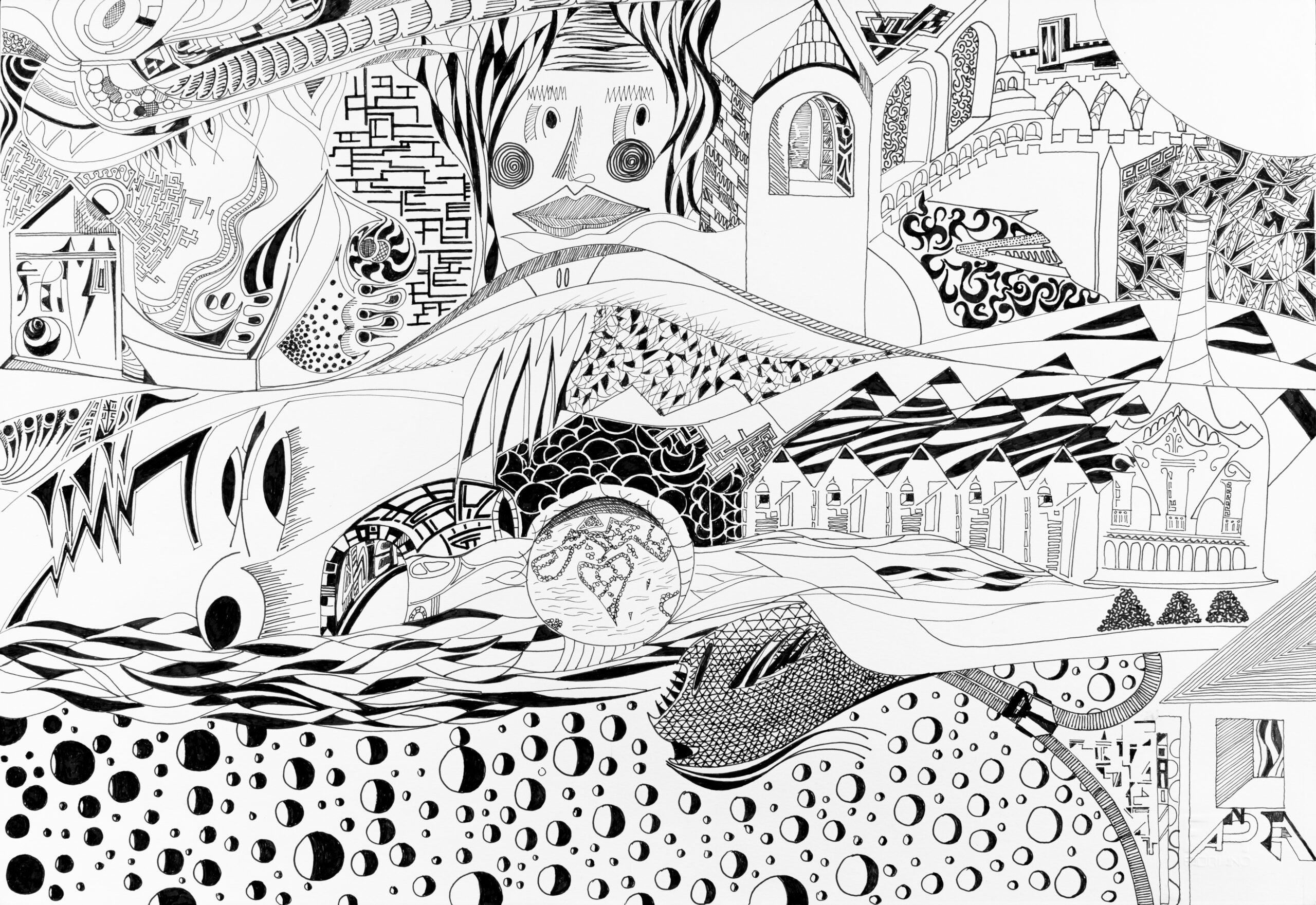
THE FISHING VILLAGE
Born from the memory of a summer holiday on a Greek island in the Nineties, The fishing village restores a place even more than a landscape. Daily life, lush nature, and the rhythms of a community not yet profoundly transformed by tourism converge in a free composition, traversed by signs and images that meet without a pre-established hierarchy. Here, the artist prioritises the immediacy of gesture over the formal discipline that will characterise many subsequent works. The result is a vital, almost choral scene, in which apparent disorder becomes an expression of authenticity and a longing for a time less conditioned by urban frenzy.
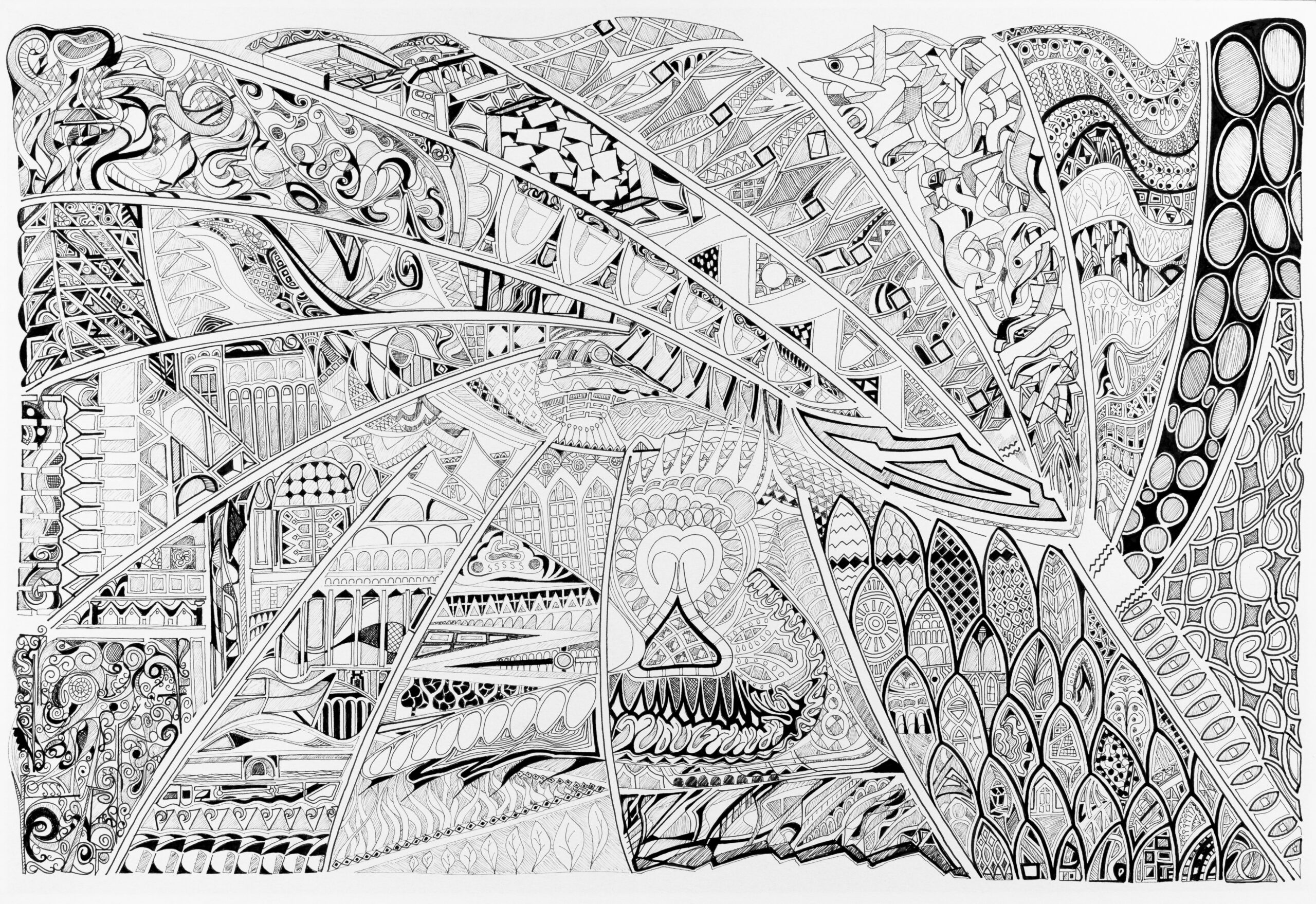
RAINBOW
Created during the artist's youth, Rainbow gathers episodes and impressions in a composition punctuated by panels. Each space hosts a different experiment in forms, subjects, and graphic registers: a plurality of languages that finds unity in the rhythm of the whole. The playful character of the work restores a feeling of trust and openness towards experience, while the already evident attention to the precision of the stroke anticipates a constant in Babetto's subsequent research. Variety does not become dispersion: it is rather the way in which a sensibility still in formation tests its expressive possibilities.
BUBBLES
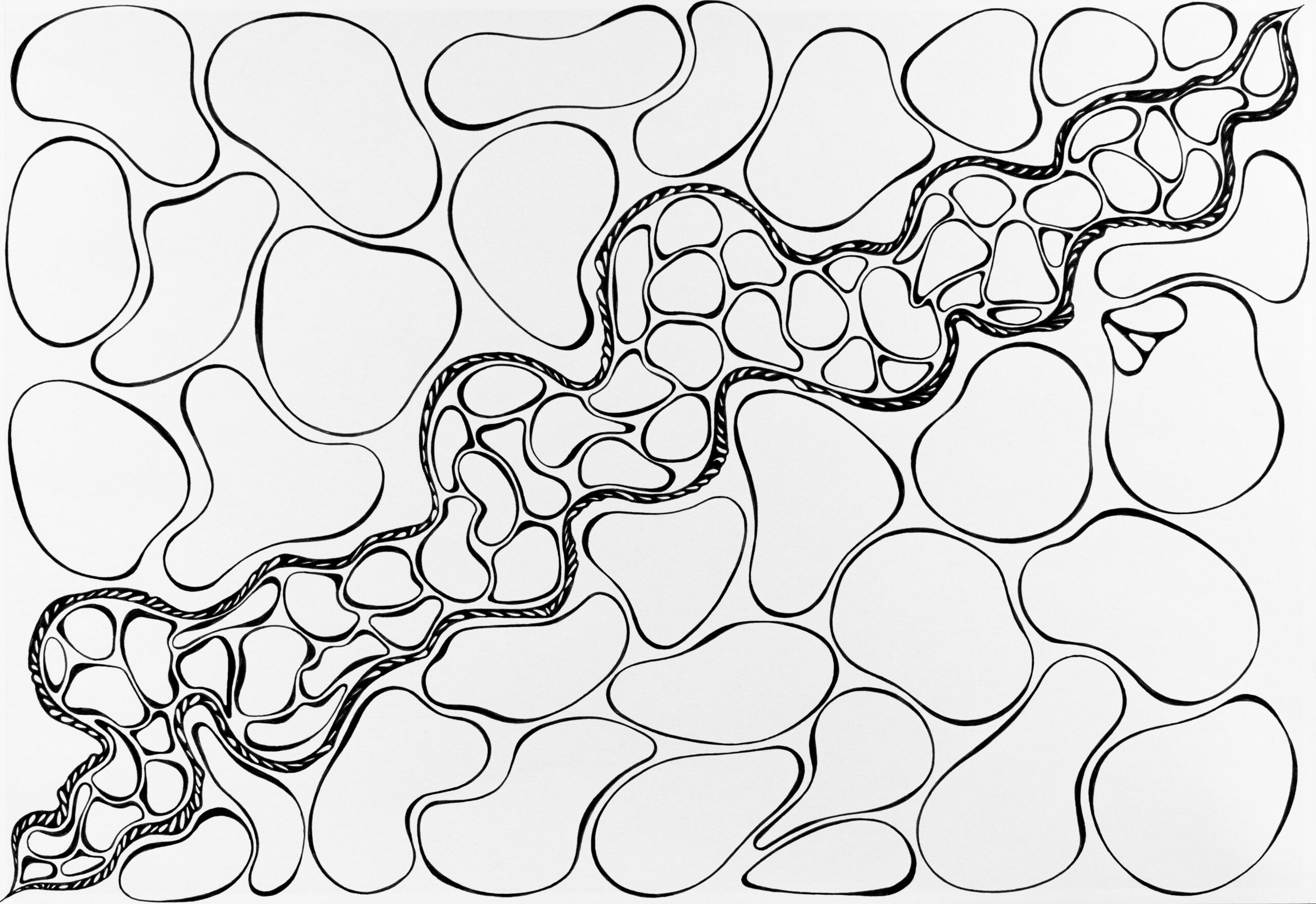
In Bubbles, children's play transforms into an exercise in memory. Soap bubbles, ephemeral forms by definition, evoke a time of discovery, wonder, and trust in the world. Babetto entrusts them to Indian ink and a carefully controlled drawing: the precision of the mark seeks to retain that which, in reality, is destined to vanish. Thus, a subtle tension opens between the lightness of the subject and the rigour of the execution. The work does not reconstruct a precise episode from childhood, but restores an emotional quality: the simple happiness of a gesture that has no other purpose than the pleasure of being lived.
WOMEN
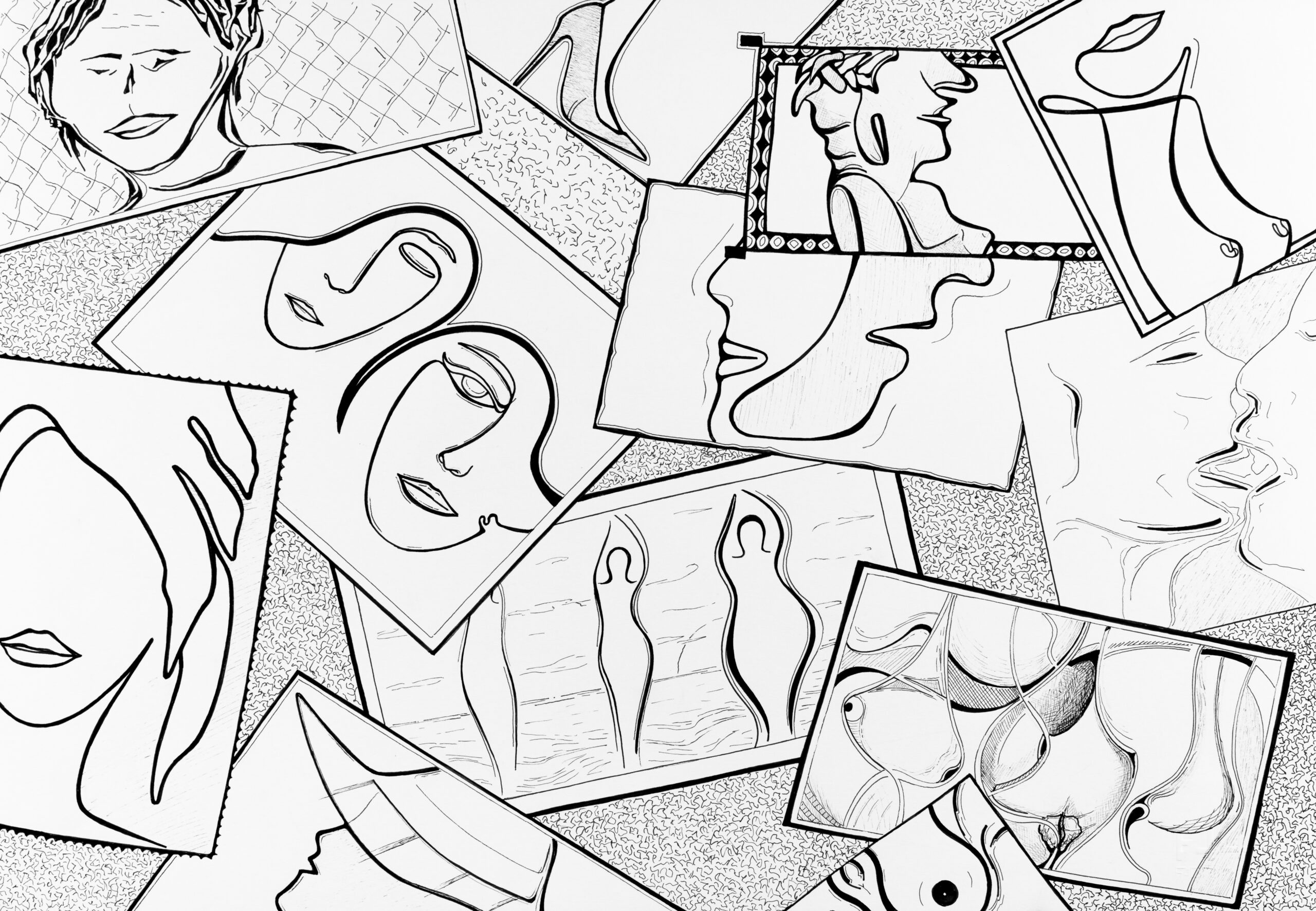
In Women, Andrea Babetto multiplies the ways of representing the female figure. Silhouettes, anatomical details, faces, accessories, and presences of different ages occupy autonomous panels, composing a kind of visual repertoire. The fragmentation does not respond to a desire to fix a single ideal: instead, it stages the variety of characters and appearances through which beauty can manifest itself. The work also marks a moment of technical experimentation, in which the artist tries different registers within the same surface. Femininity thus becomes a plural theme, observed amidst charm, imperfection, daily life, and transformation.
TREE
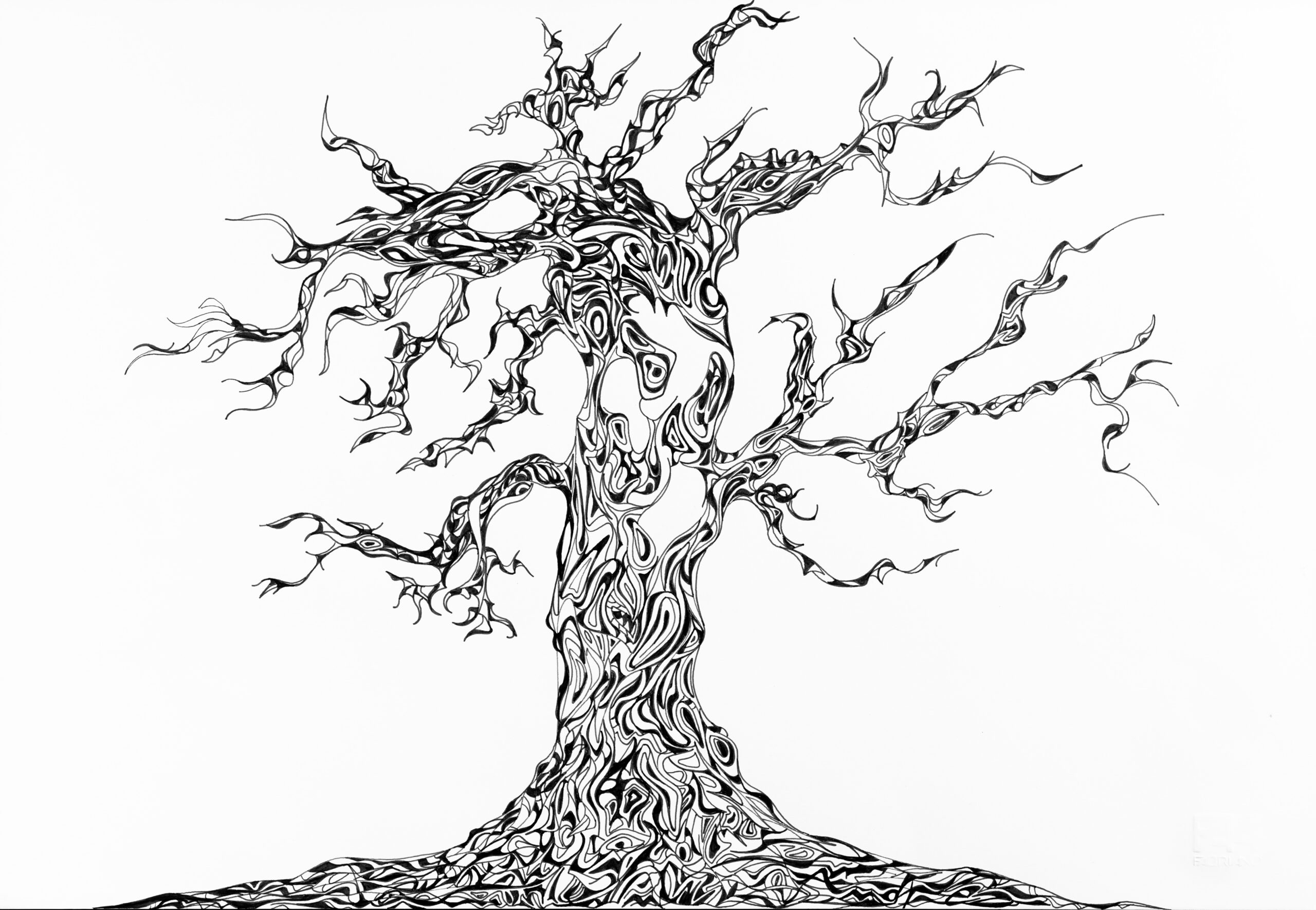
With Tree, Andrea Babetto approaches nature as an image of the life cycle. The stylised form of the trunk and its knots becomes the starting point for a weave of minute interventions, each developed with an almost autonomous attention. The subject, seemingly simple, thus opens up to a plurality of graphic paths that intertwine and mutually support each other. The organic growth of the tree corresponds to the progressive construction of the drawing: both proceed through stratifications, deviations, and continuities. The work maintains a confident tone, in which the discipline of the stroke accompanies a positive idea of transformation.
GEOMETRIES
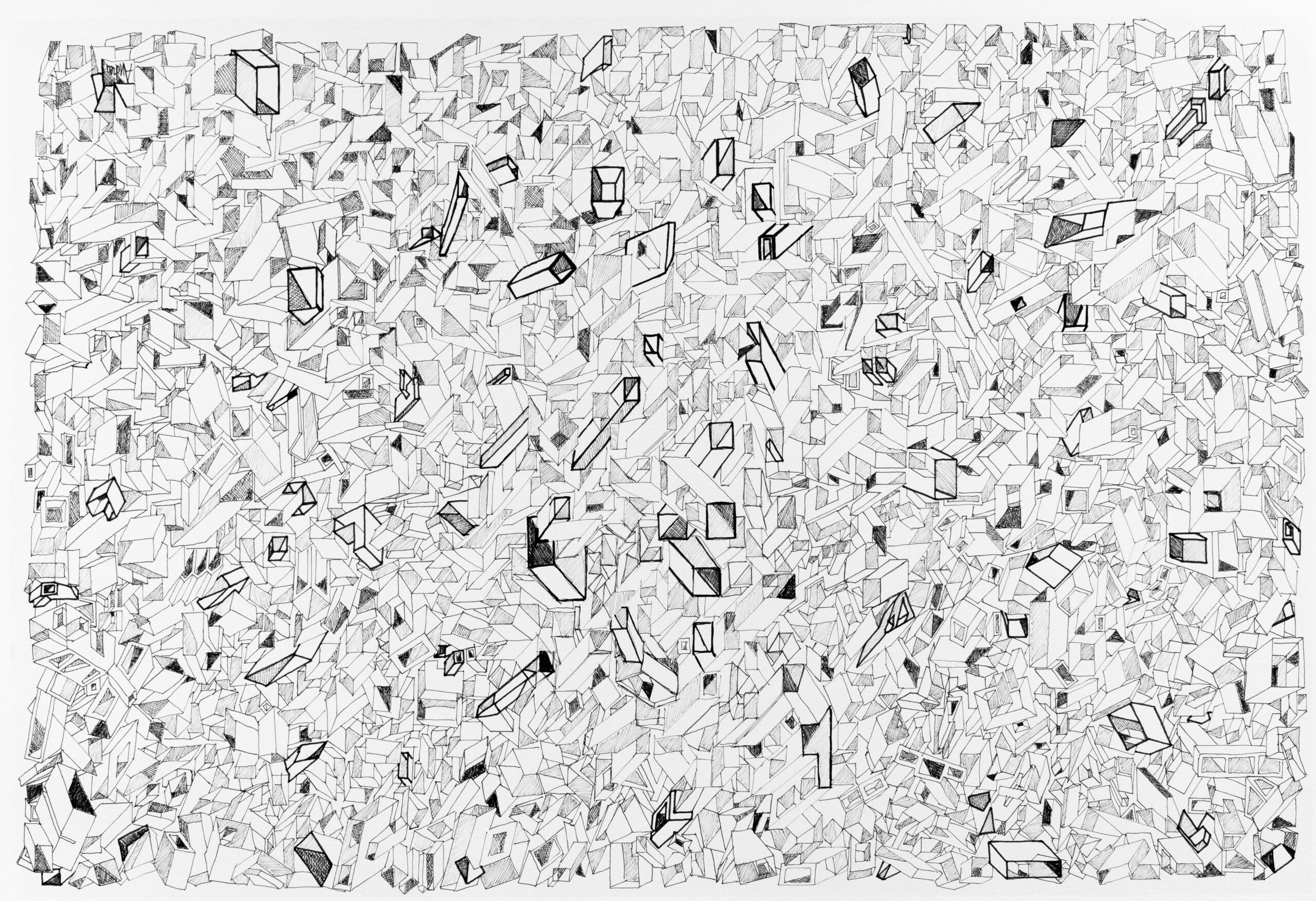
Geometries interprets the cosmopolitan city through an abstract lexicon dominated by cubic volumes and ordered structures. The thin lines lend lightness to the composition, while more pronounced interventions accentuate its depth and plastic consistency. The urban landscape is not described through recognisable buildings: it is evoked as a system of relationships, interlocks, and proportions. Babetto thus builds a balance between density and clarity, making geometry not a simple decorative principle, but a tool for observing the complexity of contemporary space.
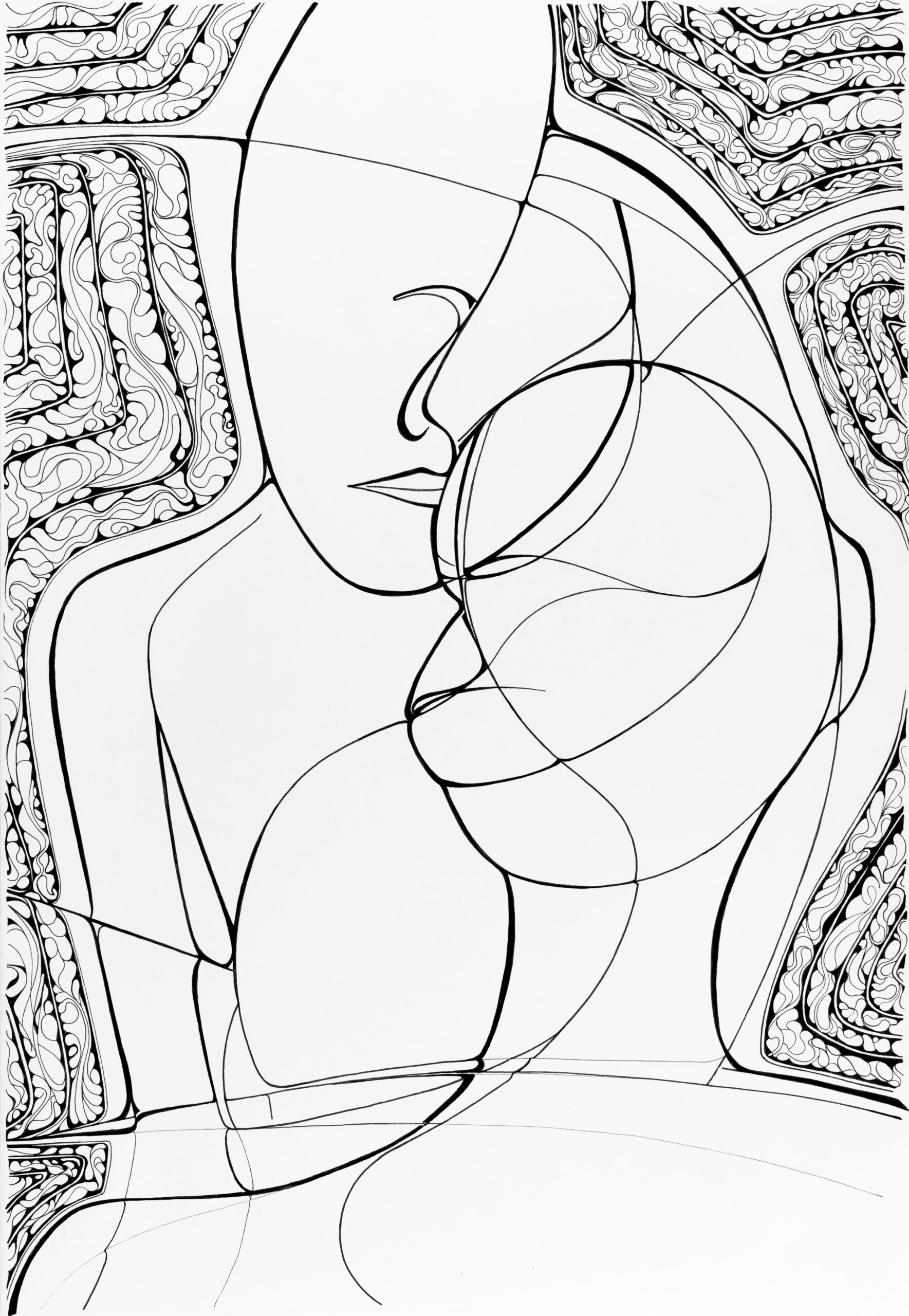
MOTHER WITH CHILD
Mother and Child explores the maternal bond as a space of protection and, simultaneously, of disquiet. The faces of the woman and child are defined by strong, interwoven marks, almost incapable of fully separating the two presences. The embrace suggests closeness and love, but does not erase the silent suffering that pervades the adult figure. The work delves into the artist's childhood memory: the child perceives the mother's pain without yet possessing the tools to comprehend it. Motherhood is thus removed from an idealised representation and restored in its emotional complexity, between the continuity of life, responsibility, and fragilities.
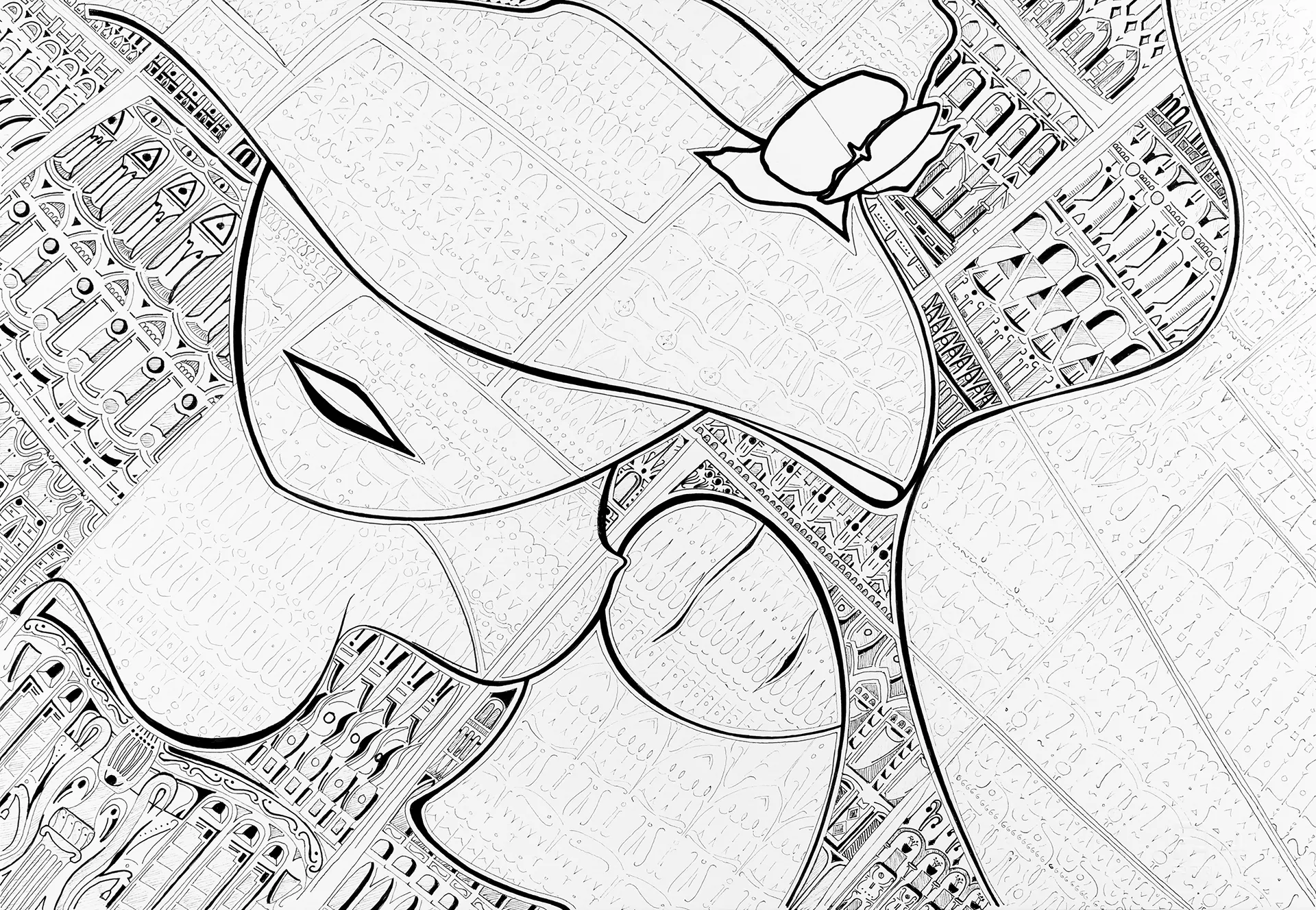
WOMAN WITH CHILD IN VENICE
Woman with Child in Venice juxtaposes the elegance of a female figure with a primary gesture of care. The woman, with a voluminous hat and refined appearance, occupies the foreground; further down appears the barely sketched face of a child, symbolically evoking breastfeeding. Venice constitutes the imagined setting of the scene, recalling a universe of history, art, and beauty. The contrast between the public image of the woman and the intimacy of the maternal relationship is not resolved, but placed at the centre of the composition. The work reflects on the coexistence of roles and identities that the female figure navigates in contemporary life.
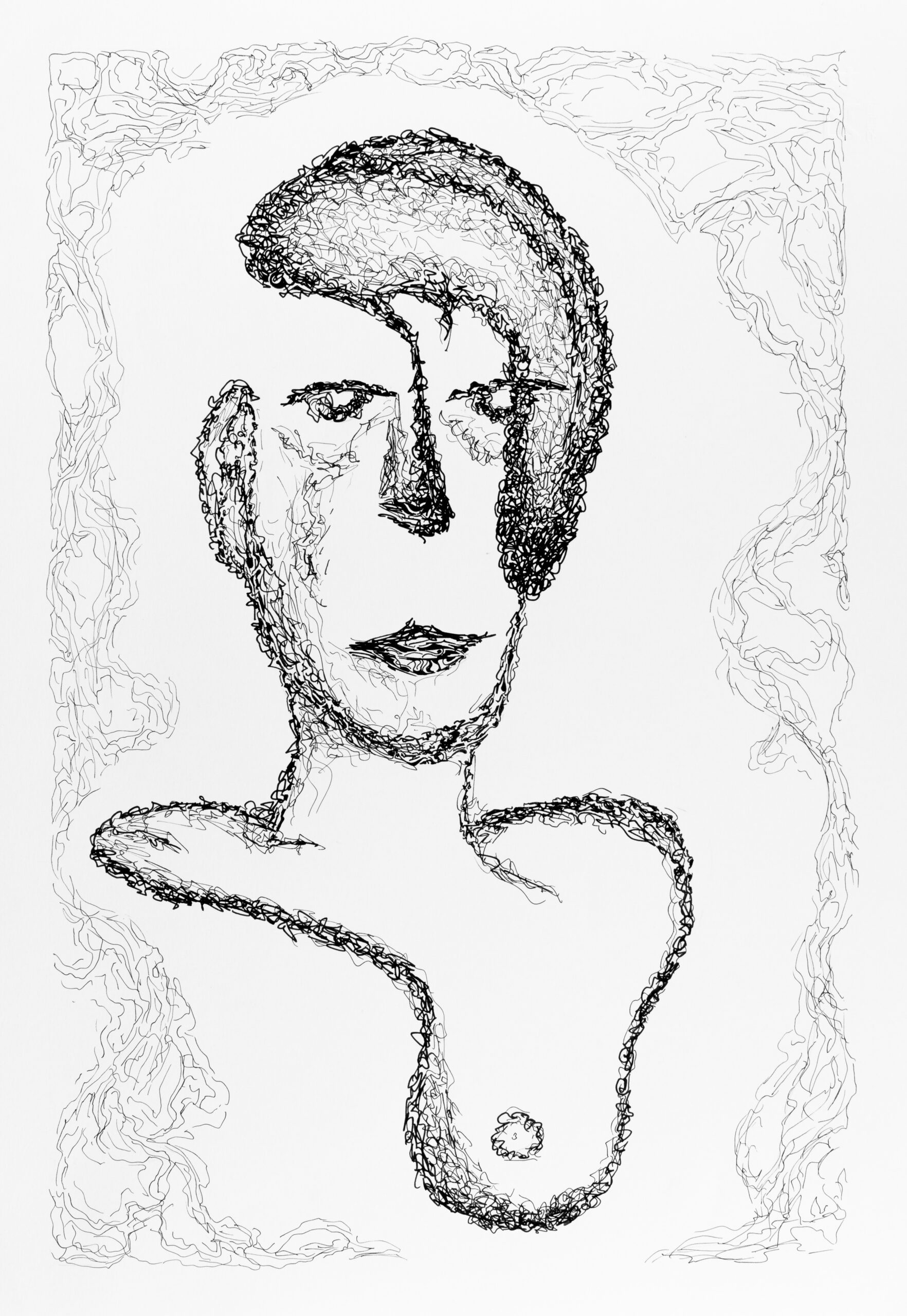
LADY WITH FRINGE
In Lady with Fringe, the portrait becomes a vehicle for a bitter emotion. The female face and bust are constructed through vigorous marks and taut forms, deliberately renouncing grace to express conflict. The figure's gaze appears sharp, almost cutting; her presence does not seek complicity with the observer. The work stems from a moment of the artist's resentment towards humanity and preserves in the graphic gesture the trace of that condition. Here, the line does not discipline feeling, but offers it a visible form, transforming discomfort into expressive intensity.
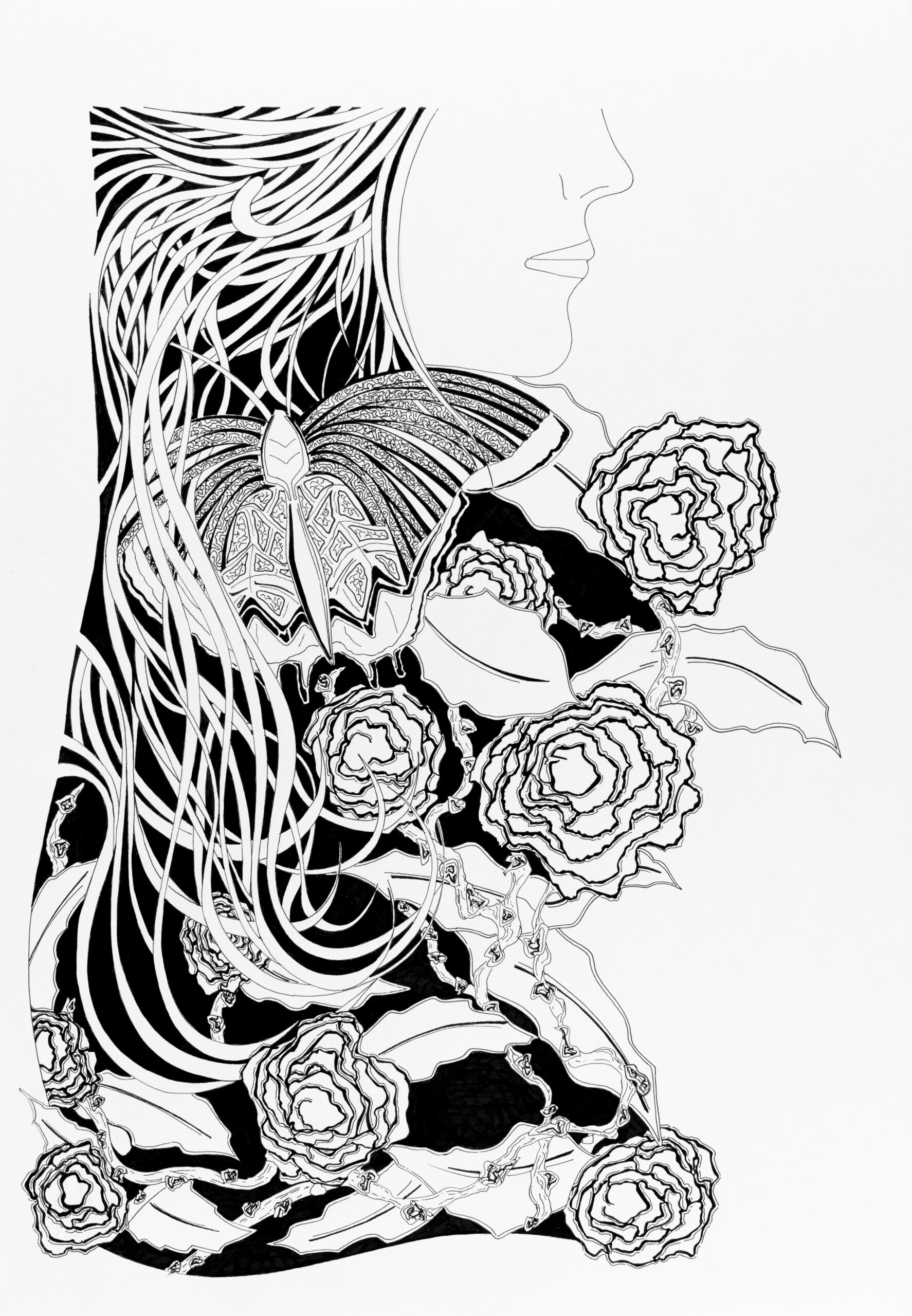
WOMAN'S PROFILE IN A GARDEN
In Woman's Profile in a Garden, the female figure manifests almost by subtraction. The barely hinted profile and flowing hair emerge in negative between flowers and vegetation, while a butterfly introduces an element of grace and movement into the scene. The garden is not merely a backdrop: it is the visual matter from which the human presence takes form. Babetto constructs a dialogue between natural beauty and feminine beauty, avoiding the establishment of a clear boundary between the two. The result is a luminous image, in which serenity derives from the continuity between body, nature, and gaze.
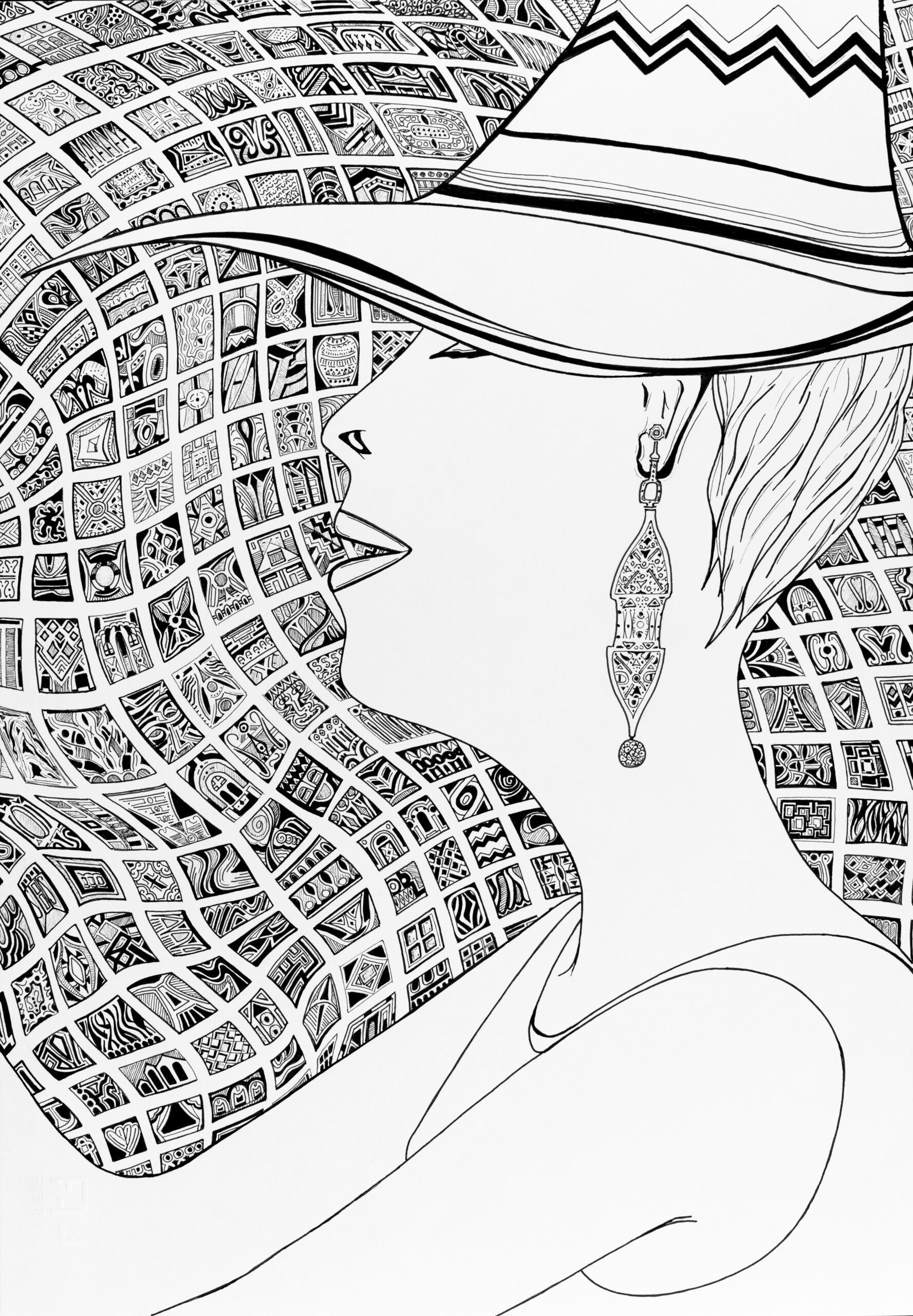
WOMAN WITH HAT
A female figure observes the space that simultaneously contains and surrounds her.
In Woman with Hat, Andrea Babetto constructs a refined dialogue between figure and abstraction. The woman is defined through very few elements — the large hat, the earrings, some essential lines — while around her, an extremely more complex texture develops.
The contrast is intentional.
The lightness of the figure is opposed to the density of the background; the economy of the line to the accumulation of marks.
The woman almost seems to observe the work of which she herself is a part, introducing a subtle short-circuit between subject and spectator.
Once again, for Babetto, elegance arises from subtraction. Beauty does not need to be described: it can be evoked through a few marks capable of leaving the task of completing the image to the gaze.

WOMAN WITH TATTOOS
In Woman with Tattoos, the back of a young woman becomes the site of a confrontation between the body's surface and graphic intervention. The figure, observed from behind and framed by long hair, is traversed by tattoos that interrupt the continuity of forms. In the background, the shaded ink allows further negative marks to emerge, creating a correspondence between body and environment. The work stems from the artist's critical stance towards the proliferation of tattoos, but visually also stages a broader question: how does the perception of beauty change when the skin becomes a support for images? The tension between the figure's candour and the density of the mark remains deliberately unresolved.
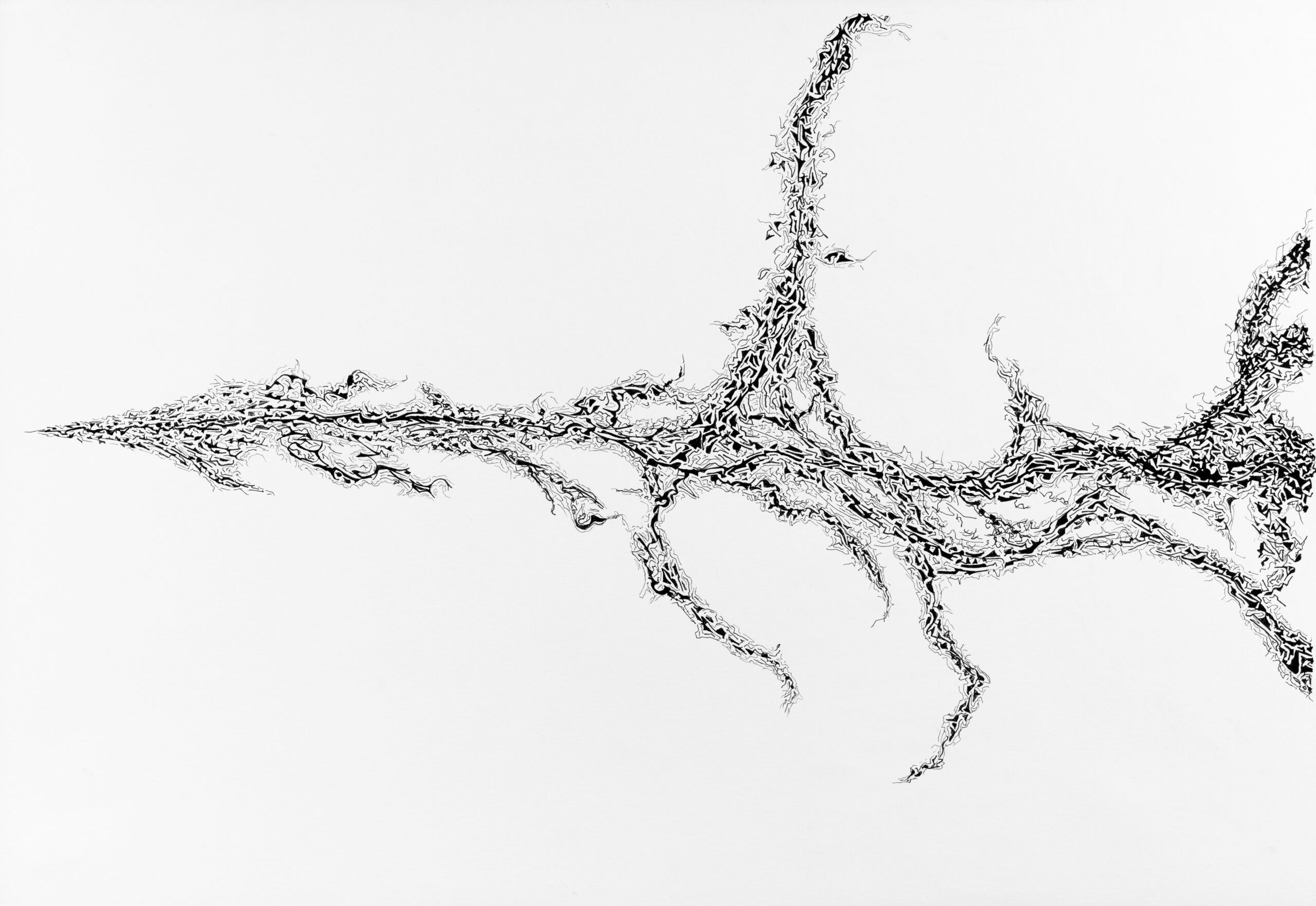
EMOTION 1 of 3
Conceived as a triptych, L’emozione develops a metaphor of growth through the image of a plant. From the roots, associated with the maternal figure and original nurturance, paths branch out, evoking the possibilities of youth and the decisions destined to define adult identity. The continuity of the branches binds the three panels into a single narrative, in which every deviation preserves its relationship with the starting point. The stroke, free and vital, accompanies this progression without transforming it into a rigid scheme. The work interprets maturation as an organic process: a form that builds itself over time through relationships, choices, and transformations.
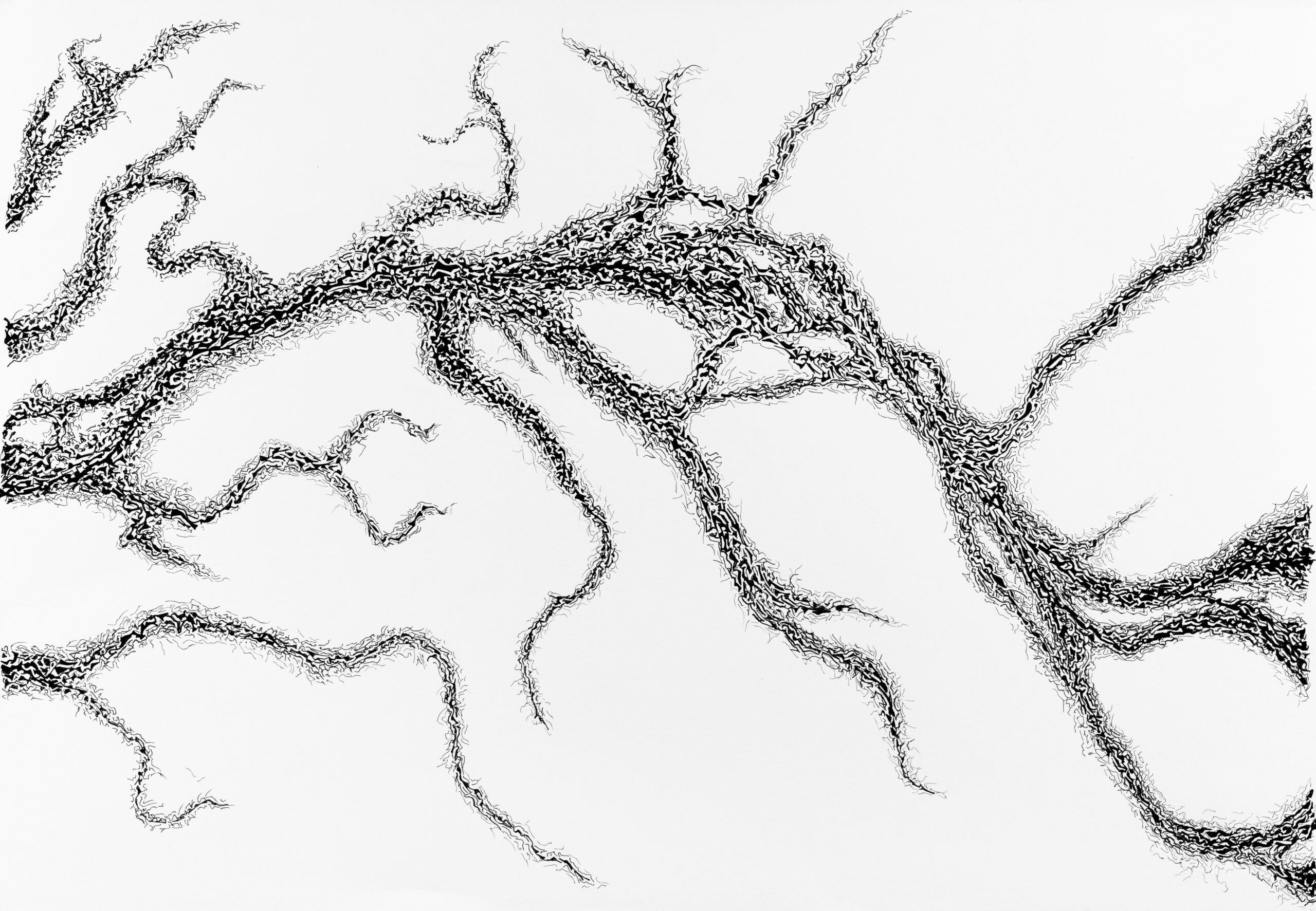
EMOTION 2 of 3
Conceived as a triptych, L’emozione develops a metaphor of growth through the image of a plant. From the roots, associated with the maternal figure and original nurturance, paths branch out, evoking the possibilities of youth and the decisions destined to define adult identity. The continuity of the branches binds the three panels into a single narrative, in which every deviation preserves its relationship with the starting point. The stroke, free and vital, accompanies this progression without transforming it into a rigid scheme. The work interprets maturation as an organic process: a form that builds itself over time through relationships, choices, and transformations.
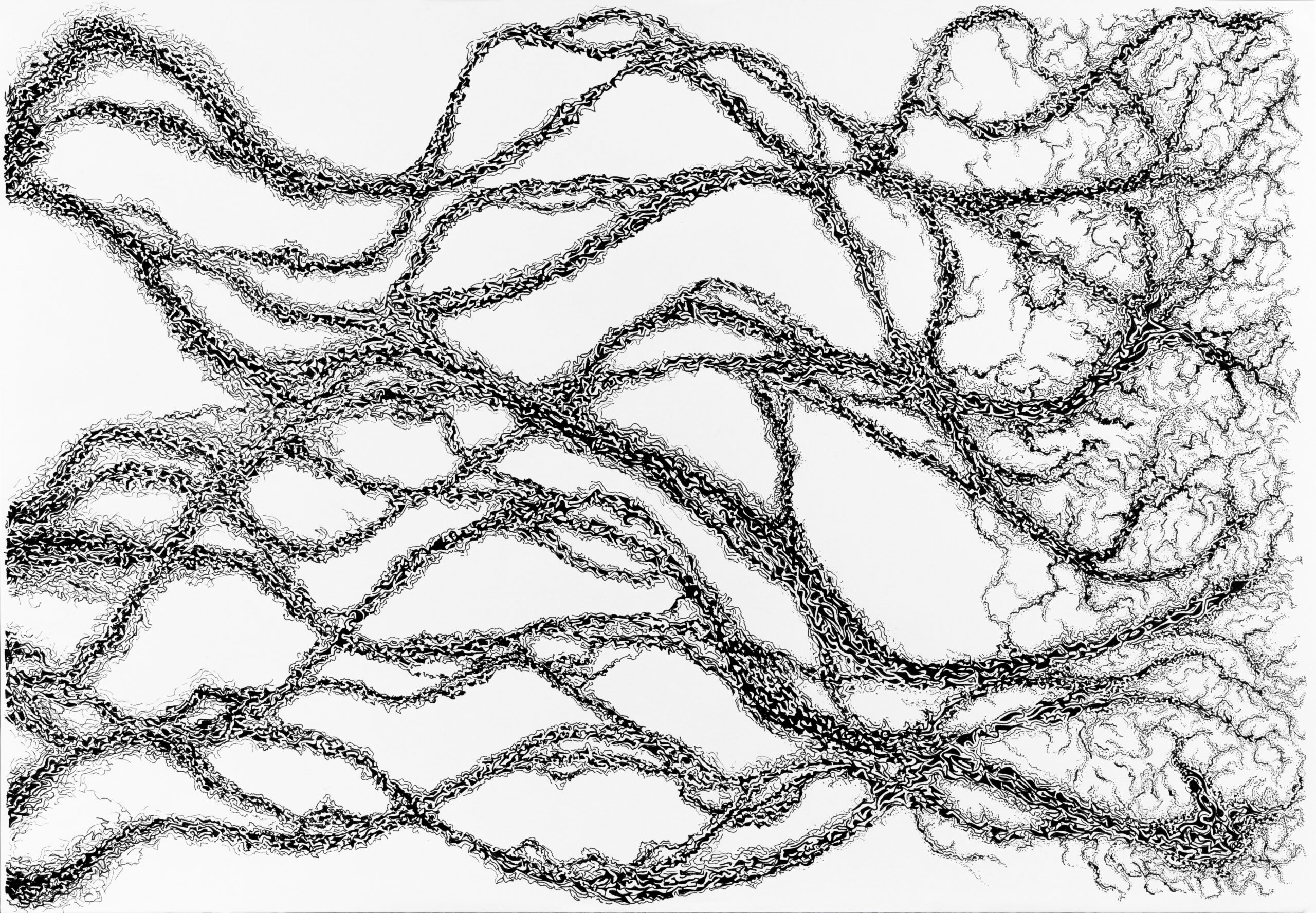
EMOTION 3 of 3
Conceived as a triptych, L’emozione develops a metaphor of growth through the image of a plant. From the roots, associated with the maternal figure and original nurturance, paths branch out, evoking the possibilities of youth and the decisions destined to define adult identity. The continuity of the branches binds the three panels into a single narrative, in which every deviation preserves its relationship with the starting point. The stroke, free and vital, accompanies this progression without transforming it into a rigid scheme. The work interprets maturation as an organic process: a form that builds itself over time through relationships, choices, and transformations.
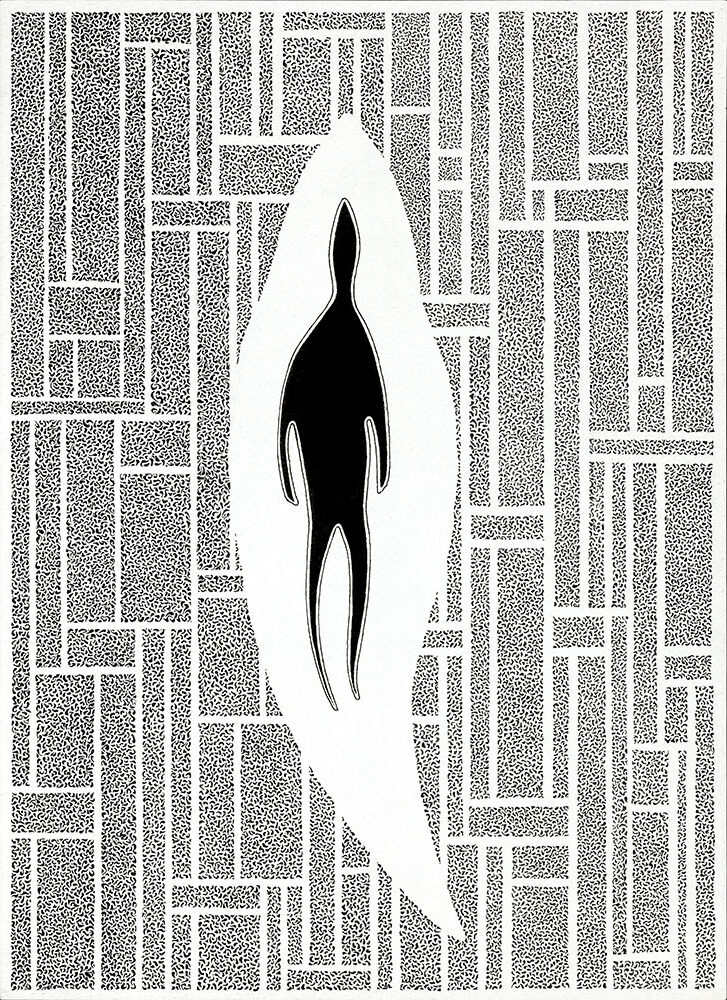
RESTLESS SOUL
Anima inquieta places a stylised human figure at the centre of a system of rigorous geometric structures. The individual recalls the worker immersed in an organisation that defines their roles, behaviours, and possibilities for action. Around them, Babetto's characteristic miniatures fill ordered shapes, evoking the complexity of contemporary corporate systems. The precision of the whole, rather than reassuring, accentuates the contrast between collective discipline and individual freedom. The work expresses a critique of the conditions in which creativity and autonomy risk being subordinated to the needs of the organisational apparatus. The restlessness of the title arises precisely from this distance between person and function.
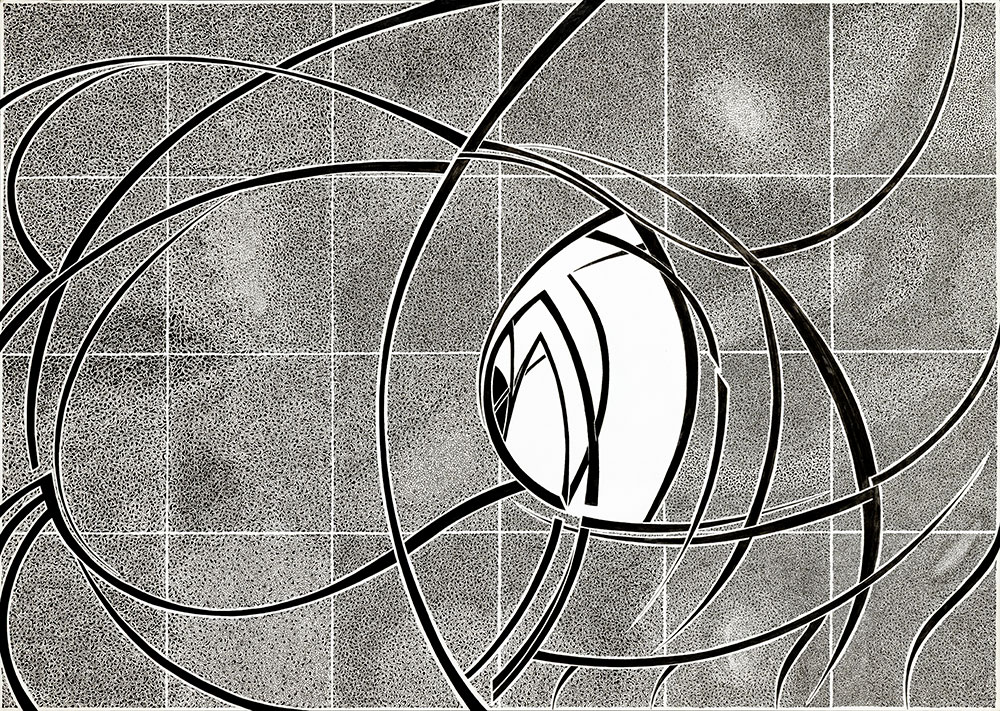
PANORAMA
In Panorama, the eye returns to occupy a central role in Andrea Babetto's research. From it branch lines that traverse the surface, suggesting a succession of viewpoints and framings. The observed landscape is translated into regular rectangles, similar to cultivated fields, each differentiated by minute variations in the weave. The geometric order recalls a territory shaped by human labour and, in the artist's interpretation, respectful of its own natural balance. The apparent uniformity thus reveals a multiplicity of details. The long execution, indicated by the artist as approximately 250 hours, becomes an integral part of the work's meaning: looking requires time, patience, and attention to differences.
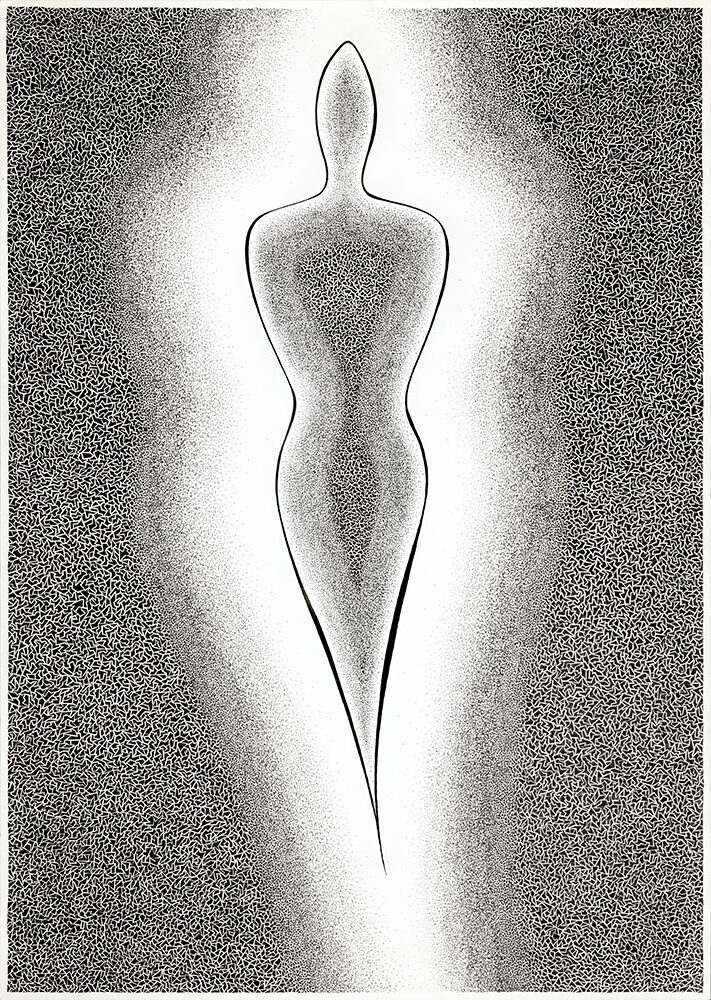
NUANCES
In Sfumature, the female figure emerges from a slow and repeatedly reconsidered process of elaboration. Her form, deliberately stylised and not fully defined, coexists with a dense weave that traverses the torso and the surrounding space. The intensity and registers of the stroke vary progressively, converging towards the subject without clearly separating it from the background. In the outermost areas, an unprecedented texture appears, expanding the artist's graphic vocabulary. The pursuit of elegance and purity does not coincide here with immediate simplicity: it is the result of hesitations, revisions, and stratifications. The title suggests precisely this mobile quality of form, constructed through gradual transitions rather than definitive outlines.
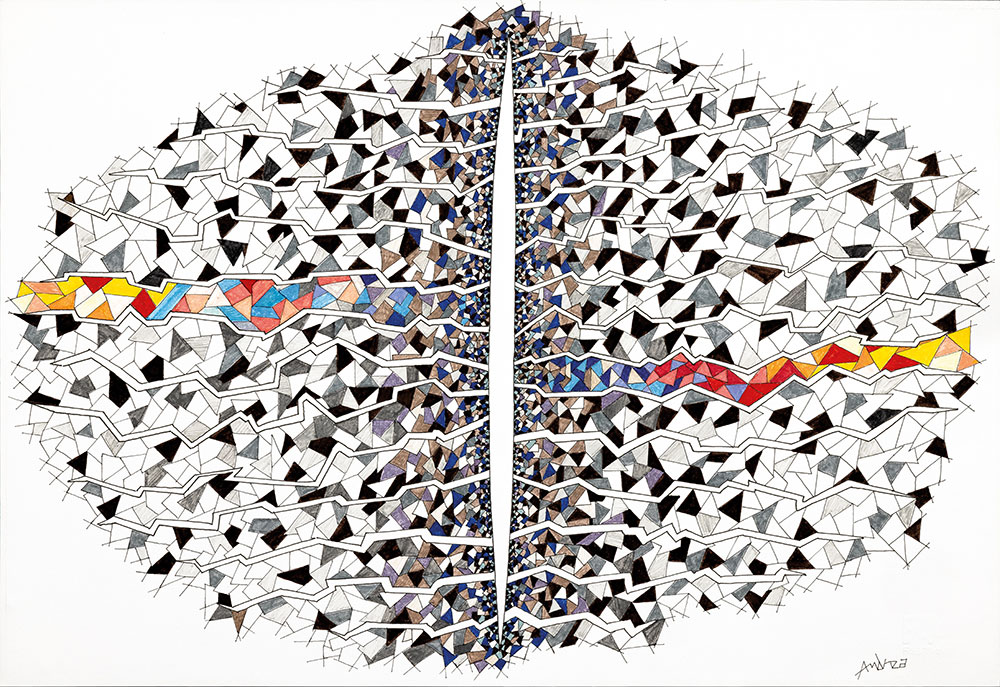
ROAD
In Road, the existential journey takes shape through a vertical cut that traverses the composition. Around this axis are arranged geometries and trajectories, images of the choices and deviations that accompany every individual experience. Colour, infrequent in the artist's production, introduces a note of vitality and attenuates the harshness of the central fracture.
The work does not deny the existence of obstacles: it includes them in an overall luminous vision, in which each passage contributes to defining a direction.
The balance of the composition thus becomes a metaphor for the ability to proceed even through uncertainty.
GAMES
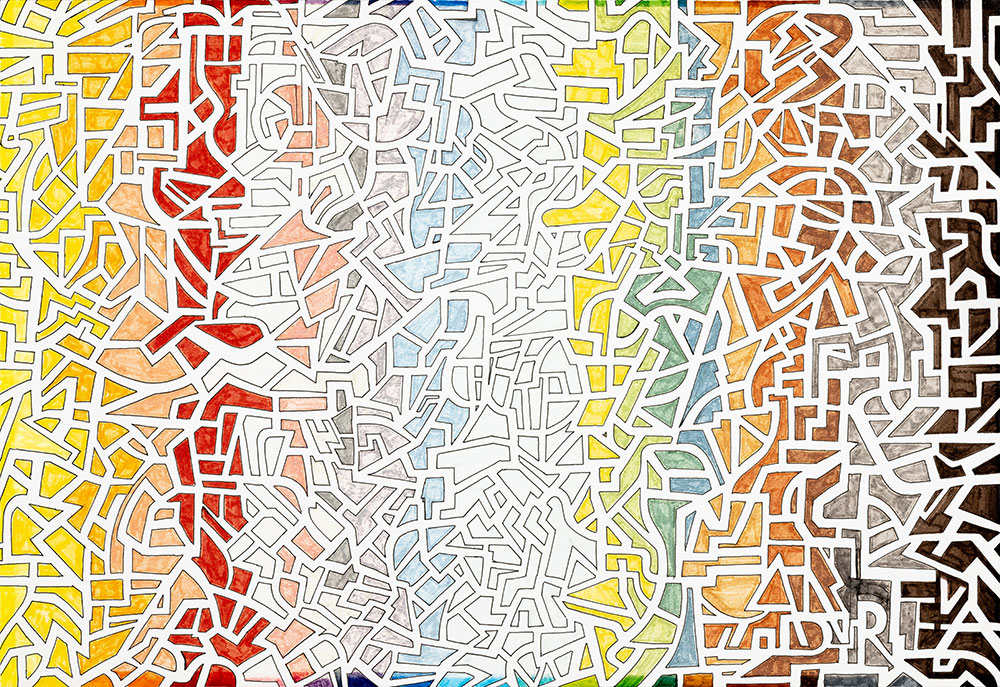
In Games, Babetto's research takes on an explicitly experimental dimension. Imaginary geometric forms and soft colours are arranged on the surface as elements of a language still open, more interested in the possibility of encounter than in a defined narrative. Colour accompanies the paths of the mark without overpowering them, contributing to an atmosphere of serenity and lightness. The discreet presence of the artist's name, integrated into the composition, reinforces the personal character of the experiment.
The work testifies to the value of play as a practice of formal freedom and as an opportunity for the pursuit of harmony.
BARON
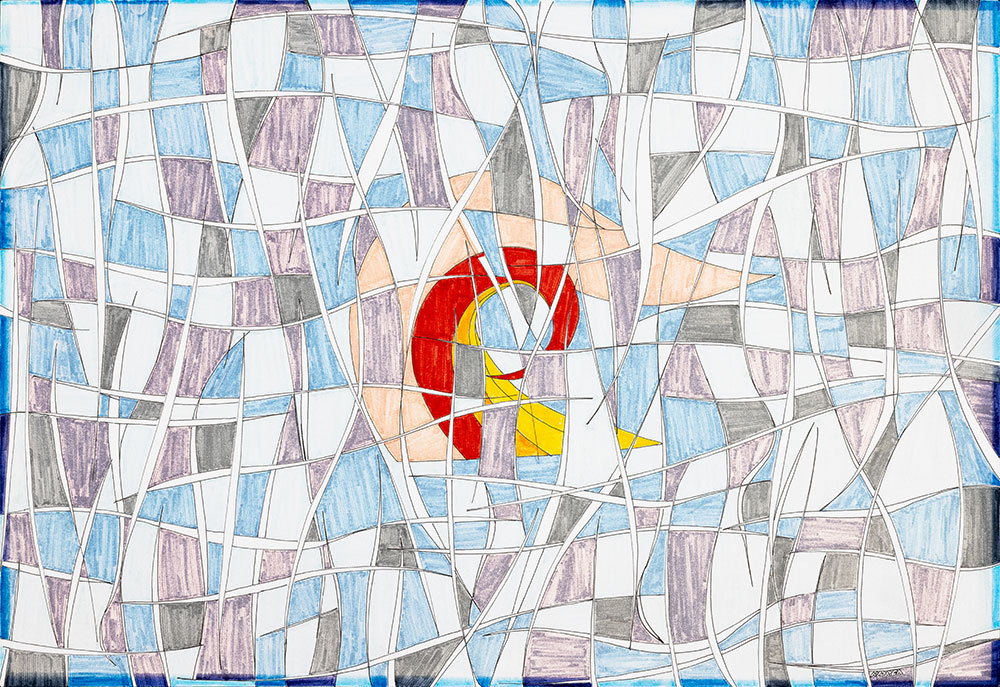
Baron is born around an animal figure of ambiguous appearance, whose profile suggests, without fully defining it, a duck's beak. The subject emerges from a wild and rocky environment, but at the same time seems to seek shelter within it. The relationship between figure and landscape is thus based on a play of appearance and concealment. The indeterminacy of the image invites the viewer to complete its meaning through observation, leaving open the distance between recognition and imagination. It is a work in which the fantastic component prevails over naturalistic description.